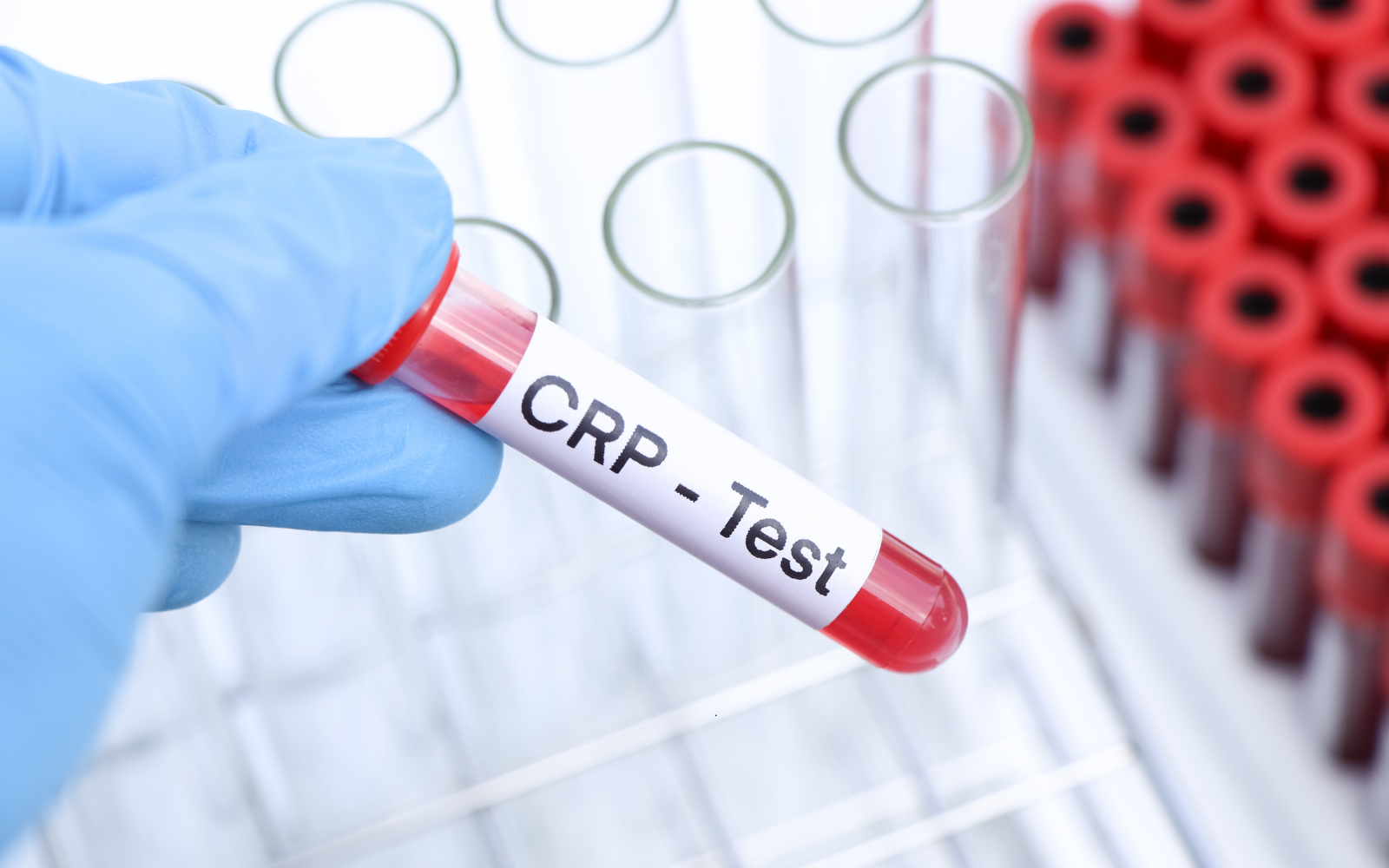
Professional HS-CRP Testing at Vanguard Performance Labs
The HS-CRP test offered by our team at Vanguard Performance Labs provides a precise measurement of C-reactive protein levels in your blood, detecting even the smallest amounts of inflammation that could signal cardiovascular risk or underlying health conditions. Our advanced blood test helps you understand your inflammatory status and take proactive steps toward optimal health, whether you’re monitoring heart disease risk, tracking athletic recovery, or investigating unexplained symptoms.
Understanding the HS-CRP Test: Your Window Into Inflammation
The high-sensitivity C-reactive protein (HS-CRP) test measures minute concentrations of C-reactive protein in your bloodstream with exceptional precision. Unlike standard CRP tests that detect only high levels of inflammation from acute infections or injuries, the HS-CRP test can identify low-grade, chronic inflammation that often goes undetected but significantly impacts your long-term health.
Our sophisticated blood test evaluates:
- Systemic inflammation levels as low as 0.1 mg/L
- Cardiovascular disease risk stratification
- Inflammatory response to lifestyle factors
- Recovery status for athletes and active individuals
- Effectiveness of anti-inflammatory interventions
The test uses advanced immunoturbidimetric or nephelometric methods to deliver accurate results that help guide your health optimization strategy. Our partnership with Quest Diagnostics ensures you receive laboratory-grade accuracy from any of its 4,000+ nationwide locations, with results typically available within 24-48 hours.
Our HS-CRP testing utilizes Quest Diagnostics’ state-of-the-art laboratories, employing standardized high-sensitivity assays that meet or exceed American Heart Association guidelines for cardiovascular risk assessment. These methods ensure accurate detection of CRP at concentrations 10 to 100 times lower than standard CRP tests, providing crucial insights into your inflammatory status.
Is HS-CRP Testing Right for You? Understanding Your Risk Profile
Ideal Candidates for Testing
The HS-CRP test is particularly valuable for individuals who fall into several key categories:
Cardiovascular Risk Assessment:
- Adults over 40 with one or more cardiovascular risk factors
- Family history of heart disease or stroke
- Individuals with metabolic syndrome or prediabetes
- Those with borderline cholesterol levels requiring additional risk stratification
Athletic Performance Monitoring:
- Endurance athletes tracking recovery and training load
- Strength athletes monitoring inflammatory response to intense training
- Individuals experiencing prolonged recovery times
- Athletes preparing for competition or returning from injury
Health Optimization Seekers:
- Biohackers and health enthusiasts tracking inflammatory markers
- Individuals following anti-inflammatory diets or protocols
- Those monitoring the effectiveness of lifestyle interventions
- People experiencing chronic fatigue or unexplained symptoms
Demographic Considerations:
Research shows that certain populations particularly benefit from HS-CRP monitoring. Women approaching menopause often experience increased inflammatory markers that contribute to cardiovascular risk. Individuals with autoimmune conditions can use HS-CRP testing to track disease activity and treatment response. Those with a history of COVID-19 may benefit from monitoring persistent inflammation as part of long-COVID assessment.
Signs You May Need an HS-CRP Test
Common indicators suggesting HS-CRP testing could provide valuable insights include:
- Persistent joint stiffness or muscle soreness beyond normal exercise recovery
- Unexplained fatigue despite adequate rest and nutrition
- Family history of early cardiovascular disease
- Difficulty losing weight despite a proper diet and exercise
- Frequent minor illnesses or slow wound healing
Benefits of HS-CRP Testing: Transforming Health Through Inflammation Insights
Cardiovascular Risk Stratification
Understanding your HS-CRP levels provides crucial information beyond traditional cholesterol testing. According to the American Heart Association, individuals with HS-CRP levels above 3.0 mg/L have approximately twice the risk of heart attack compared to those with levels below 1.0 mg/L, independent of other risk factors.
Regular monitoring helps you:
- Identify hidden cardiovascular risk before symptoms appear
- Make informed decisions about preventive interventions
- Track the effectiveness of lifestyle modifications
- Determine if additional cardiac testing is warranted
Personalized Health Monitoring
The HS-CRP test serves as a biomarker for overall health status, reflecting the cumulative impact of lifestyle factors, including:
- Dietary quality and inflammatory food responses
- Sleep quality and stress management effectiveness
- Exercise intensity and recovery adequacy
- Environmental toxin exposure
This comprehensive view allows for targeted interventions that address the root causes of inflammation rather than just treating symptoms.
Quest Diagnostics Partnership Benefits:
- FDA-approved high-sensitivity assays
- Consistent methodology across all locations
- Electronic result delivery within 48 hours
- Historical tracking capabilities for trend analysis
Athletic Performance and HS-CRP: Optimizing Training Through Inflammation Management
For competitive athletes, managing inflammation represents a critical balance between training adaptation and recovery. The HS-CRP test provides objective data to guide training decisions and prevent overreaching that could compromise performance or increase injury risk.
Training Load Management
Recent research in sports science demonstrates that HS-CRP levels correlate directly with training volume and intensity. Athletes maintaining HS-CRP levels below 1.0 mg/L show:
- Superior aerobic capacity improvements
- Better strength and power adaptations
- Reduced incidence of upper respiratory tract infections
- Faster recovery between competitions
Elite endurance athletes often experience transient HS-CRP elevations following intense training blocks or competitions, with levels sometimes exceeding 10 mg/L after ultra-endurance events. Monitoring these fluctuations helps coaches and athletes distinguish between beneficial training stress and harmful overreaching.
Recovery Optimization
The HS-CRP test serves as an objective recovery marker, complementing subjective measures like perceived exertion and mood states. Studies show that athletes with persistently elevated HS-CRP levels (>3.0 mg/L) during training periods experience:
- Decreased power output in subsequent sessions
- Impaired glycogen replenishment
- Compromised immune function
- Increased cortisol response to training
Injury Prevention
Perhaps most critically for athletes, HS-CRP monitoring can identify increased injury risk before symptoms manifest. Research indicates that athletes with baseline HS-CRP levels above 2.0 mg/L have a 40% higher risk of soft tissue injuries compared to those with lower levels. This early warning system allows for preemptive adjustments to training load, recovery protocols, or nutritional interventions.
Nutritional Strategies
Athletes using HS-CRP testing to guide nutritional interventions report significant improvements in recovery and performance. Anti-inflammatory dietary strategies that effectively lower HS-CRP include:
- Omega-3 fatty acid supplementation (2-4g daily)
- Polyphenol-rich foods and supplements
- Adequate protein intake for tissue repair
- Strategic use of antioxidants around training
What’s Included in Your HS-CRP Test Package
Comprehensive Testing Components
Our HS-CRP test from Vanguard Performance Labs includes everything needed for accurate assessment and actionable insights:
Core Test Features:
- High-sensitivity C-reactive protein measurement with detection limits as low as 0.1 mg/L
- Risk category classification based on American Heart Association guidelines
- Comparison to age and gender-matched reference populations
- Physician review and interpretation of results
Results and Support:
Every test includes detailed results interpretation designed for both medical professionals and health-conscious individuals. You’ll receive:
- Secure online portal access available 24/7
- Downloadable PDF reports for medical records
- Historical tracking with graphical trend analysis
- Evidence-based recommendations for addressing elevated levels
Additional Testing Options:
Enhance your inflammatory assessment with complementary tests:
- Lipid panel for comprehensive cardiovascular risk assessment
- Homocysteine for additional cardiac risk stratification
- Fibrinogen for complete inflammatory and clotting evaluation
- Comprehensive metabolic panel for overall health status
How Our HS-CRP Testing Process Works
Simple 3-Step Testing Protocol
Step 1: Order Your Test Online
Browse our test catalog and select your HS-CRP test or comprehensive inflammation panel. No doctor’s referral required – our licensed physicians provide the necessary lab orders. Complete your secure checkout in minutes and receive immediate confirmation with your personalized lab requisition form.
Step 2: Visit Any Quest Diagnostics Location
- Choose from 4,000+ convenient locations nationwide
- Most locations offer walk-in service without appointments
- Quick blood draw takes less than 5 minutes
- Professional phlebotomists ensure comfortable, efficient collection
Step 3: Receive Your Results
Results are typically available within 24-48 hours of sample collection. You’ll receive an email notification when your results are ready, with secure access through our HIPAA-compliant patient portal. Each report includes clear interpretation, risk stratification, and personalized recommendations based on your results.
Understanding Your HS-CRP Results: Risk Categories and Clinical Significance
HS-CRP results are measured in milligrams per liter (mg/L) and classified into distinct cardiovascular risk categories:
Low Risk: Less than 1.0 mg/L
Indicates minimal inflammation and lower cardiovascular disease risk. This optimal range suggests effective inflammatory control through lifestyle factors. Individuals in this range should maintain their current healthy habits while continuing periodic monitoring.
Average Risk: 1.0-3.0 mg/L
Moderate inflammation levels suggest intermediate cardiovascular risk. This range often indicates opportunities for lifestyle optimization. Consider anti-inflammatory dietary changes, stress reduction techniques, and regular exercise to lower levels.
High Risk: Above 3.0 mg/L
Elevated inflammation is associated with increased cardiovascular disease risk. Levels in this range warrant comprehensive evaluation and aggressive risk reduction strategies. Consultation with healthcare providers is recommended for personalized intervention planning.
Very High: Above 10.0 mg/L
Significantly elevated levels typically indicate acute infection, injury, or inflammatory condition rather than cardiovascular risk. Retesting after resolution of acute conditions is recommended to obtain accurate baseline values.
Why Choose Vanguard Performance Labs for Your HS-CRP Testing
Excellence in Laboratory Testing and Customer Care
Vanguard Performance Labs combines cutting-edge laboratory technology with personalized service to deliver exceptional testing experiences. Our commitment to quality includes:
Clinical Excellence:
- Exclusive partnership with Quest Diagnostics, processing over 3 billion tests annually
- CAP-accredited and CLIA-certified laboratory facilities
- Continuous quality monitoring and proficiency testing
- Board-certified pathologist oversight of all results
Customer-Focused Experience:
We understand that health testing should be accessible and understandable. Our approach includes:
- Transparent pricing with no hidden fees or surprise charges
- Knowledgeable support team available for questions
- Educational resources to help you understand your results
- Flexible testing options to fit your schedule and location
Comprehensive Health Solutions:
Beyond HS-CRP testing, we offer integrated health assessments that provide complete pictures of your wellness status. Our test catalog includes hormones, nutrients, metabolic markers, and specialized panels designed for specific health goals.
Related Testing Options: Building Your Complete Inflammatory Profile
Consider these complementary tests to maximize your health insights:
Cardiac Inflammation Panel
Combines HS-CRP with homocysteine, fibrinogen, and Lp-PLA2 for comprehensive cardiovascular inflammation assessment. Ideal for individuals with family history of heart disease or multiple risk factors.
Athletic Recovery Panel
Includes HS-CRP alongside cortisol, testosterone, and growth hormone markers. Perfect for athletes optimizing training and recovery protocols.
Autoimmune Screening Panel
Features HS-CRP with ANA, rheumatoid factor, and specific antibody tests. Recommended for individuals with joint pain, fatigue, or family history of autoimmune conditions.
Metabolic Inflammation Panel
Comprehensive testing, including HS-CRP, insulin, hemoglobin A1c, and lipid panel. Designed for metabolic syndrome assessment and diabetes risk evaluation.
Frequently Asked Questions About HS-CRP Testing
Do I need to fast before the HS-CRP test?
No fasting is required for HS-CRP testing. However, if you’re combining it with lipid testing or other tests requiring fasting, follow those specific requirements.
How often should I test my HS-CRP levels?
For cardiovascular risk assessment, annual testing is typically sufficient unless you’re actively working to lower elevated levels. Athletes may benefit from quarterly testing to track training responses. Those implementing anti-inflammatory interventions might test every 2-3 months initially.
Can medications affect HS-CRP results?
Yes, several medications can influence HS-CRP levels. Statins typically lower HS-CRP by 15-30%. NSAIDs may temporarily reduce levels. Hormone replacement therapy might increase levels. Always inform your healthcare provider about current medications when interpreting results.
What’s the difference between CRP and HS-CRP?
Standard CRP tests detect levels above 10 mg/L, useful for identifying acute infections or injuries. The HS-CRP test measures levels as low as 0.1 mg/L, detecting subtle inflammation relevant to cardiovascular risk and chronic disease.
Can lifestyle changes really lower HS-CRP?
Absolutely. Studies show that Mediterranean-style diets can reduce HS-CRP by 20-30%. Regular moderate exercise lowers levels by 15-20%. Weight loss of 5-10% can decrease HS-CRP by up to 30%. Stress reduction and improved sleep quality also contribute to lower levels.
Is HS-CRP testing covered by insurance?
While we don’t bill insurance directly, we provide detailed receipts with CPT codes for potential reimbursement. Many insurance plans cover HS-CRP testing for cardiovascular risk assessment. HSA and FSA funds can typically be used for testing.
Take Control of Your Inflammatory Health Today
Ready to Understand Your Inflammation Levels?
Don’t let silent inflammation undermine your health and performance. With Vanguard Performance Labs’ professional HS-CRP testing, you receive accurate results from Quest Diagnostics’ certified laboratories with convenient testing at thousands of locations nationwide. Within 48 hours, you’ll have clear insights into your inflammatory status and personalized recommendations for achieving optimal health.
Your journey to better health starts with understanding your body’s inflammatory response. Whether you’re an athlete optimizing performance, a health enthusiast tracking wellness markers, or someone concerned about cardiovascular risk, the HS-CRP test provides crucial information for informed health decisions.