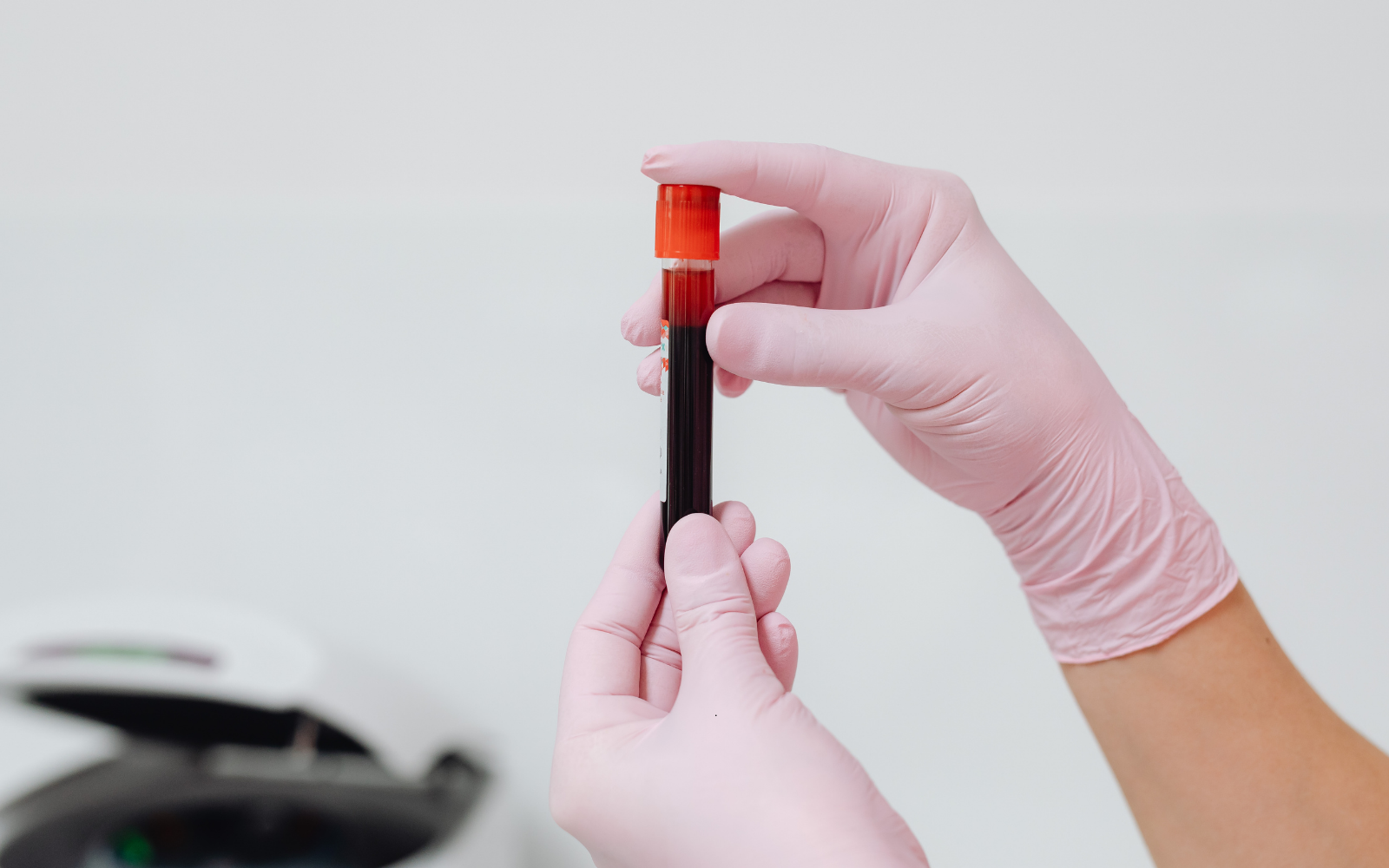
Professional ApoB Testing at Vanguard Performance Labs
The ApoB test offered by our team at Vanguard Performance Labs provides precise measurement of apolipoprotein B levels through a simple blood test, delivering critical insights into your cardiovascular disease risk that traditional cholesterol tests may miss. Our advanced cardiovascular assessment helps you understand your true heart disease risk by counting the actual number of atherogenic particles in your blood, whether you’re managing existing heart conditions, optimizing preventive care, or seeking the most accurate evaluation of your cardiovascular health status.
Cardiovascular Risk Assessment: The Superior ApoB Test Explained
Apolipoprotein B testing measures the total number of atherogenic (plaque-forming) lipoprotein particles in your blood, providing a more accurate predictor of heart disease risk than standard LDL cholesterol measurements. Unlike traditional cholesterol tests that estimate the amount of cholesterol within particles, the ApoB test counts each harmful particle directly, since every atherogenic lipoprotein contains exactly one ApoB molecule.
Our comprehensive blood test evaluates:
- Total atherogenic particle count including LDL, VLDL, IDL, and Lp(a)
- Direct measurement unaffected by particle size variations
- Accurate risk assessment even with normal LDL levels
- Non-fasting capability for convenient testing
The test uses standardized immunoassay techniques to deliver precise results that help guide your cardiovascular prevention strategy. Our partnership with Quest Diagnostics ensures you receive laboratory-grade accuracy from any of its 4,000+ nationwide locations.
Our ApoB testing utilizes Quest Diagnostics’ state-of-the-art laboratories, employing internationally standardized immunoassay methods endorsed by the World Health Organization. These methods ensure accurate detection of all apoB-containing particles while maintaining consistency across all testing locations.
Is ApoB Testing Right for You? Understanding Your Risk Profile
Ideal Candidates for Testing
ApoB testing is particularly beneficial for individuals who need a more accurate cardiovascular risk assessment beyond standard cholesterol panels:
Metabolic Risk Factors:
- Type 2 diabetes or prediabetes
- Metabolic syndrome diagnosis
- Insulin resistance
- Elevated triglycerides (>150 mg/dL)
Health Conditions:
- Family history of premature heart disease
- Previous heart attack or stroke
- Hypertension despite treatment
- Obesity or significant weight changes
Treatment Monitoring:
- Currently taking statins or other lipid-lowering medications
- Achieved LDL goals but residual risk concerns
- Need for therapy intensification decisions
- Monitoring response to lifestyle interventions
Demographic Considerations:
Individuals with certain genetic backgrounds may have discordant LDL and ApoB levels, making direct particle measurement essential. Those with South Asian, Hispanic, or Native American ancestry often show higher cardiovascular risk at lower LDL levels. Additionally, postmenopausal women and men over 40 benefit from ApoB testing as traditional risk factors may underestimate their true cardiovascular burden.
Signs You May Need an ApoB Test
Common indicators suggesting ApoB testing could reveal hidden cardiovascular risk include having normal LDL cholesterol but persistent cardiovascular symptoms, family members with heart disease despite “normal” cholesterol, and difficulty achieving cardiovascular risk reduction despite treatment. Many people also experience:
- Chest discomfort with exertion that standard tests don’t explain
- Multiple cardiovascular risk factors with borderline cholesterol levels
- Metabolic abnormalities suggesting insulin resistance
- Unexplained fatigue or reduced exercise capacity
Benefits of ApoB Testing: Superior Risk Prediction
Transform Your Cardiovascular Health with Precise Particle Measurement
Understanding your ApoB levels through professional testing provides crucial information that traditional cholesterol tests miss. Studies show that up to 20% of patients have discordant LDL and ApoB levels, meaning their true cardiovascular risk differs significantly from what LDL cholesterol alone suggests.
Evidence-Based Risk Assessment
Receive the most accurate measurement of cardiovascular risk available today. Research demonstrates that ApoB:
- Predicts heart attack risk better than LDL cholesterol
- Identifies residual risk in statin-treated patients
- Provides consistent results regardless of fasting state
- Remains accurate even with very low LDL levels
Personalized Treatment Optimization
Our ApoB testing enables precision medicine approaches to cardiovascular prevention. Your results help determine:
- Whether current treatments are adequately reducing particle burden
- Need for therapy intensification or modification
- Response to lifestyle interventions
- True achievement of cardiovascular risk reduction goals
Clinical Decision Support
Healthcare providers increasingly recognize ApoB as the superior marker for treatment decisions. Testing helps ensure:
- Appropriate medication selection and dosing
- Identification of high-risk patients needing aggressive therapy
- Better outcomes through targeted interventions
- Cost-effective treatment strategies
Quest Diagnostics Partnership Benefits:
- WHO-standardized testing methodology
- Consistent results across all locations
- Electronic health record integration
- Physician-reviewed interpretations
Athletic Performance and ApoB: Optimizing Cardiovascular Fitness
For athletes and fitness enthusiasts pursuing peak performance, optimal cardiovascular health represents the foundation of endurance, power, and recovery. Our ApoB testing provides critical insights that directly impact athletic capability by assessing the efficiency of oxygen delivery systems and identifying hidden cardiovascular risks that could limit performance or threaten long-term health.
Performance Optimization:
Endurance Capacity:
Athletes with optimal ApoB levels (<80 mg/dL) demonstrate superior cardiovascular efficiency, with studies showing improved VO2max and lactate threshold compared to those with elevated particle counts. Lower atherogenic particle burden means cleaner arteries and better blood flow during intense exercise.
Recovery Enhancement:
Optimal ApoB levels correlate with faster post-exercise recovery through improved nutrient delivery and waste removal. Athletes report better training consistency and reduced recovery time between intense sessions.
Power Output Maintenance:
Research indicates that athletes with elevated ApoB levels show earlier fatigue onset and reduced power maintenance during high-intensity intervals, potentially due to suboptimal oxygen delivery to working muscles.
Training Adaptations:
Recent studies on endurance athletes revealed that those with ApoB levels below 80 mg/dL achieved significantly better improvements in time trial performance and showed enhanced training adaptations compared to athletes with higher levels. The low-ApoB group demonstrated superior improvements in cardiac output, stroke volume, and peripheral oxygen extraction.
Cardiovascular Efficiency:
For competitive athletes, even subclinical atherosclerosis can impact performance. Studies show that elevated ApoB levels, even within “normal” ranges, correlate with reduced arterial compliance and increased cardiovascular workload during exercise. This translates to higher heart rates at given power outputs and reduced efficiency during competition.
Long-Term Athletic Health:
Perhaps most critically for athletes, maintaining optimal ApoB levels protects against exercise-related cardiovascular events. Research demonstrates that athletes with ApoB levels above 90 mg/dL have an increased risk of atrial fibrillation, exercise-induced arrhythmias, and premature cardiovascular disease despite high fitness levels. Regular ApoB monitoring helps identify athletes who need additional cardiovascular protection despite their active lifestyles.
What’s Included in Your ApoB Test
Comprehensive Testing Package
Our ApoB test from Vanguard Performance Labs provides everything needed for accurate cardiovascular risk assessment and actionable insights:
Core Test Components:
- Apolipoprotein B-100 measurement (direct particle count)
- Comparison to established cardiovascular risk thresholds
- Correlation with traditional lipid values
- Physician-reviewed results and interpretation
Results and Support:
Every test includes detailed results interpretation with clear explanations of your cardiovascular risk level. You’ll receive:
- Secure online access to results within 48-72 hours
- Comprehensive report with risk stratification
- Downloadable PDF for your medical records
- Evidence-based recommendations for risk reduction
Additional Options:
Enhance your cardiovascular assessment with complementary tests:
- Complete lipid panel for comprehensive cholesterol analysis
- Lp(a) testing for genetic cardiovascular risk
- hsCRP for inflammation assessment
- Insulin and glucose for metabolic evaluation
How Our ApoB Testing Works
Simple 3-Step Testing Process
Step 1: Order Your Test Online
Browse our test catalog and select your ApoB test or cardiovascular panel. No doctor’s referral is required for most tests, making the process quick and convenient. Complete your secure checkout in minutes and receive immediate confirmation with your lab requisition form.
Step 2: Visit Any Quest Location
- Choose from 4,000+ convenient locations nationwide
- No appointment necessary at most locations
- Quick blood draw takes less than 5 minutes
- No fasting required for ApoB testing
Step 3: Receive Your Results
Results are typically available within 1-2 business days. You’ll receive an email notification when your results are ready, with secure online access through our patient portal. Each report includes a clear interpretation with cardiovascular risk categories and actionable recommendations.
Understanding Your Results: ApoB Levels and Cardiovascular Risk
ApoB results are measured in milligrams per deciliter (mg/dL) and correlate with cardiovascular disease risk:
Optimal: Less than 80 mg/dL
Target level for secondary prevention in patients with established cardiovascular disease. This level indicates a very low atherogenic particle burden and minimal residual risk.
Low Risk: 80-90 mg/dL
Acceptable range for primary prevention in low-risk individuals. Represents good cardiovascular health with room for optimization.
Moderate Risk: 90-100 mg/dL
Borderline elevation suggesting increased cardiovascular risk. Lifestyle modifications and possible pharmacological intervention should be considered.
High Risk: 100-130 mg/dL
Significantly elevated particle count requiring intervention. Most individuals in this range benefit from lipid-lowering therapy.
Very High Risk: Above 130 mg/dL
Severe elevation is associated with high cardiovascular disease risk. Aggressive treatment is typically required to reduce particle burden.
Research from major cardiovascular trials suggests that optimal ApoB levels vary based on individual risk factors. The European Society of Cardiology recommends targets of <65 mg/dL for very high-risk patients, while the National Lipid Association suggests <80 mg/dL for high-risk individuals. Our reports provide personalized interpretation based on your complete risk profile.
Why Choose Vanguard Performance Labs
Experience and Expertise You Can Trust
Vanguard Performance Labs brings together cutting-edge laboratory technology with personalized health optimization. Our approach combines:
Clinical Excellence
- Partnership with Quest Diagnostics’ 4,000+ CLIA-certified laboratories
- Board-certified pathologist review of all results
- WHO-standardized testing methodology
- Consistent accuracy across all locations
Customer-Focused Service
We understand that navigating cardiovascular risk can feel overwhelming. Our team provides:
- Clear, actionable results interpretation
- Evidence-based recommendations
- Transparent pricing with no hidden fees
- Responsive customer support
Innovative Testing Solutions
Beyond standard ApoB testing, we offer advanced cardiovascular assessments to support your health optimization journey. Our integrated approach helps you understand how particle counts impact your overall cardiovascular risk picture.
Related Testing Options: Complete Your Cardiovascular Assessment
Consider these complementary tests to maximize your cardiovascular insights:
Advanced Lipid Panel
Combines ApoB with NMR lipoprofile for detailed particle size and number analysis. Ideal for those with complex lipid disorders or treatment-resistant dyslipidemia.
Cardiometabolic Panel
Includes ApoB, insulin, glucose, hsCRP, and comprehensive metabolic markers. Perfect for individuals with metabolic syndrome or diabetes.
Cardiovascular Genetics Panel
Assesses genetic markers, including Lp(a), ApoE genotype, and familial hypercholesterolemia mutations. Designed for those with a family history of premature heart disease.
Inflammation and Plaque Panel
Combines ApoB with inflammatory markers and plaque stability indicators. Recommended for secondary prevention and risk stratification.
Frequently Asked Questions: ApoB Testing Explained
How is ApoB different from LDL cholesterol?
LDL cholesterol measures the amount of cholesterol within LDL particles, while ApoB counts the actual number of all atherogenic particles. Since particle number predicts risk better than cholesterol content, ApoB provides superior risk assessment.
Do I need to fast before an ApoB test?
No fasting is required for ApoB testing. Unlike calculated LDL cholesterol, ApoB measurement is unaffected by recent meals, making it more convenient for testing.
How often should I test my ApoB levels?
For initial assessment, baseline testing is recommended. If starting treatment, retest after 6-12 weeks to assess response. Once stable, annual testing is typically sufficient, though high-risk individuals may benefit from more frequent monitoring.
Can ApoB be elevated even with normal LDL?
Yes, approximately 20% of individuals have discordant ApoB and LDL levels. This is particularly common in people with metabolic syndrome, diabetes, or high triglycerides, where small, dense LDL particles are prevalent.
Is ApoB testing covered by insurance?
Many insurance plans cover ApoB testing when medically indicated. We provide detailed receipts with CPT codes for insurance submission or HSA/FSA reimbursement.
What if my ApoB is elevated?
Elevated ApoB requires cardiovascular risk reduction strategies. Treatment options include lifestyle modifications, statins, ezetimibe, PCSK9 inhibitors, or combination therapy based on your risk level and response.
Take Control of Your Cardiovascular Health
Discover Your Real Heart Disease Risk Today
Standard cholesterol tests miss up to 20% of people at risk for heart disease. The ApoB test reveals what LDL cholesterol can’t see by counting the actual particles that cause atherosclerosis, not just estimating cholesterol content.
With Vanguard Performance Labs’ professional ApoB testing, you receive accurate particle measurement from Quest Diagnostics’ certified laboratories, with convenient testing at 4,000+ locations nationwide and no fasting required. Your results arrive within 48 hours with clear interpretation and actionable recommendations for optimizing your cardiovascular health.
Don’t wait for symptoms to discover hidden cardiovascular risk. The ApoB test provides the precise data you and your doctor need to make informed decisions about prevention and treatment today.