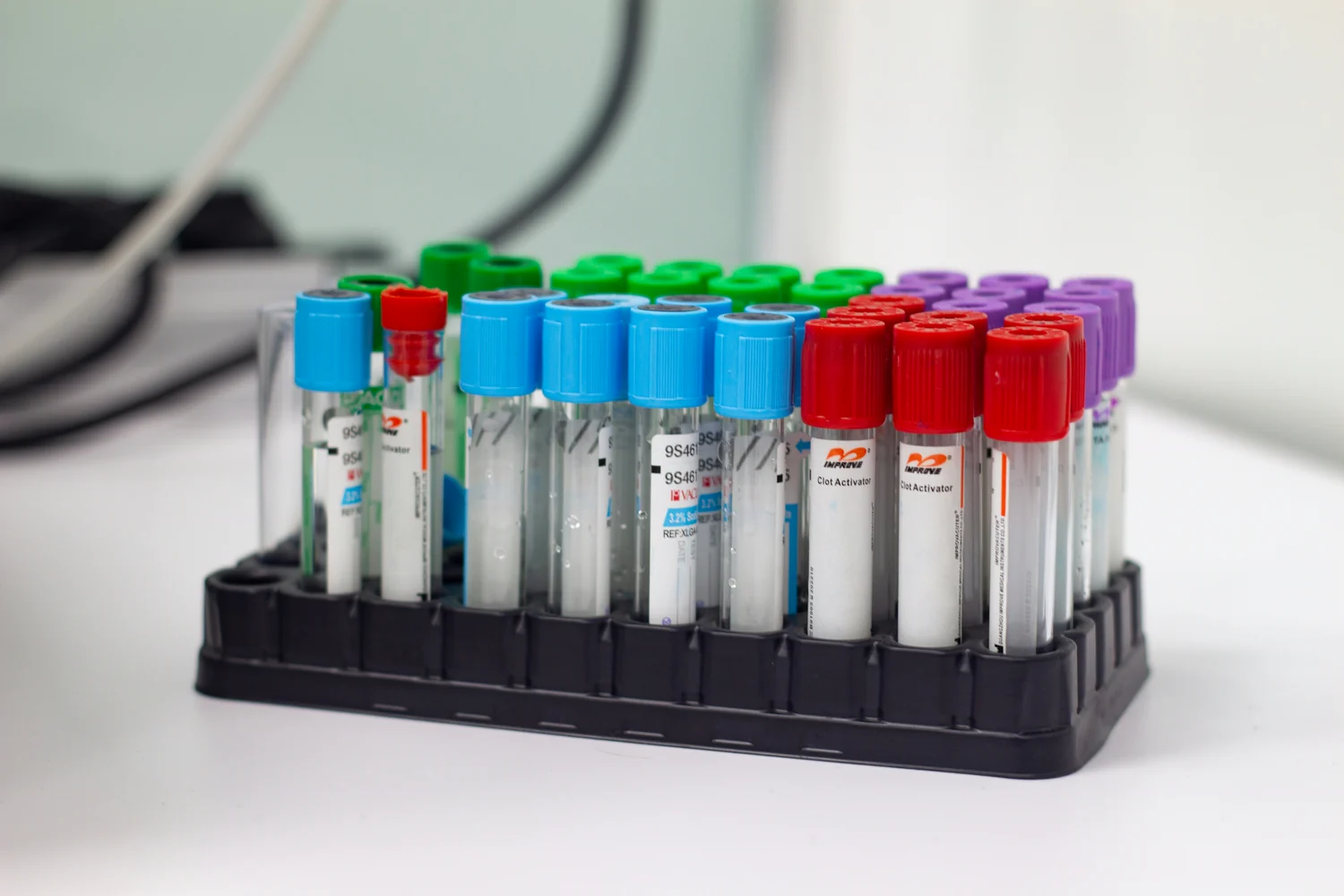
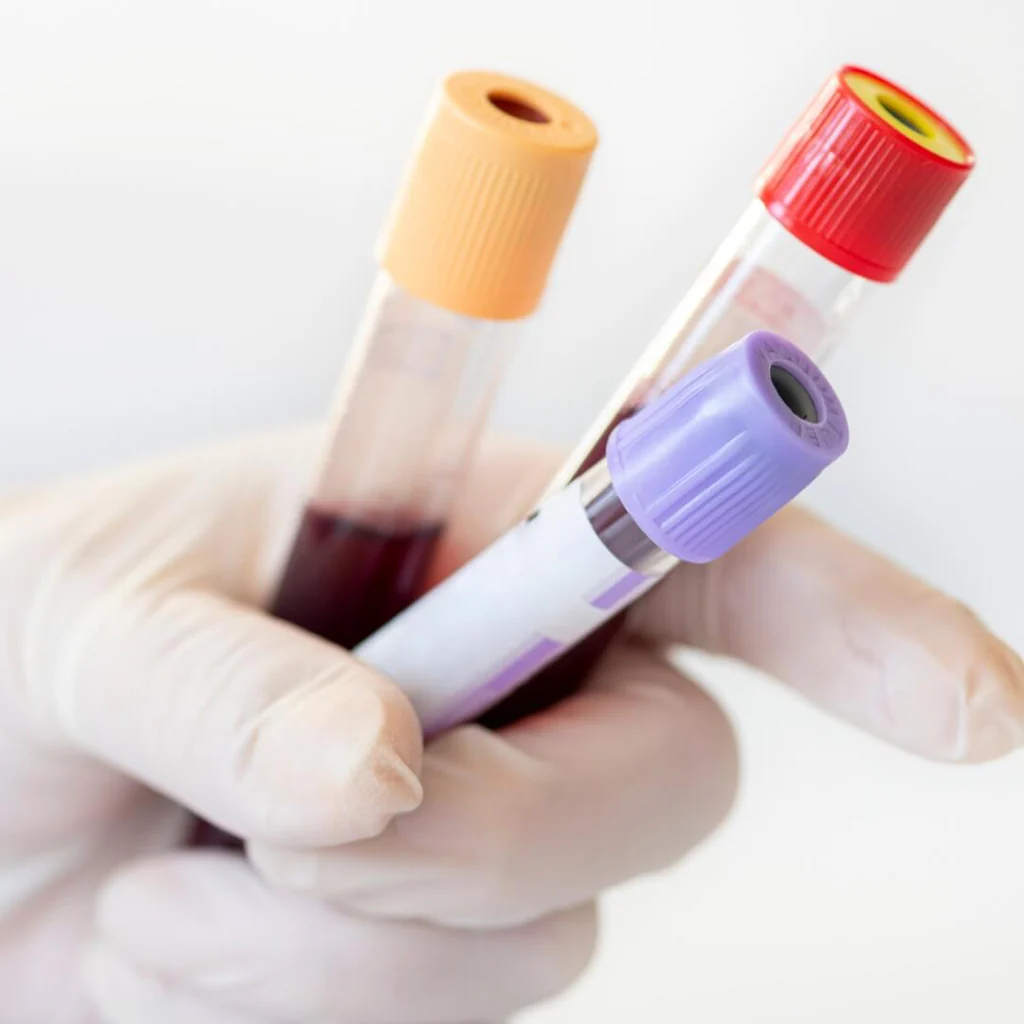
Quick answer: Creatinine and cystatin C are blood markers used to estimate kidney filtration, usually through an eGFR equation. Creatinine can be influenced by muscle mass, diet, and secretion, while cystatin C has its own non-kidney influences. When both are available, a combined creatinine-cystatin C estimate may improve accuracy in some clinical decisions.
What creatinine measures
Creatinine is a waste product related to normal muscle metabolism. Healthy kidneys remove it from the blood, so its concentration can help estimate glomerular filtration rate.
The result is a marker, not a direct measurement of filtration. Laboratories combine serum creatinine with equation inputs to report an estimated GFR. The equation, assay, age, and clinical setting matter.
What cystatin C measures
Cystatin C is a small protein produced by nucleated cells and filtered by the kidneys. The National Kidney Foundation explains that its blood level can be used to estimate GFR by itself or with creatinine.
Cystatin C is less tied to muscle mass than creatinine. It is still not free from non-kidney influences, and its availability and cost can differ.
How both markers are used in eGFR
An eGFR equation estimates filtration from a blood marker and other inputs. It does not measure GFR directly.
The National Institute of Diabetes and Digestive and Kidney Diseases says the combined creatinine-cystatin C equation can provide higher accuracy and less bias than creatinine alone. Combined estimation can be especially useful when a result sits near a clinical decision point.
Factors that can affect creatinine
Creatinine concentration and creatinine-based eGFR may be influenced by:
Muscle mass and recent muscle injury
Meat or creatine intake around testing
Some medicines and tubular secretion
Rapid changes in kidney function
Assay and biological variation
These factors do not make creatinine useless. They explain why an estimate may be less reliable in some people or situations.
Factors that can affect cystatin C
Cystatin C also has non-GFR determinants. Reviews discuss thyroid status, systemic corticosteroids, inflammation, obesity, and other debated influences.
The NIDDK eGFR accuracy resource notes that biomarker measurement, individual marker metabolism, and differences between a person and the equation-development population can affect accuracy.
Laboratory measurements and equation inputs both affect how eGFR estimates are interpreted.
Why two estimates may differ
Creatinine-based and cystatin-C-based estimates may diverge because the markers respond differently to body composition, medicines, illness, and other factors. Measurement and equation uncertainty also contribute.
A difference should prompt context, not an automatic conclusion that one result is wrong. Clinicians may review trends, urine albumin, medical history, medicines, body composition, and the decision tied to the estimate.
Is one marker better?
No marker is universally best for every person. A peer-reviewed 2024 review describes non-GFR determinants for both creatinine and cystatin C and examines the value of using both.
Creatinine remains widely available and useful. Cystatin C can add information when creatinine may be less reliable. A combined equation may reduce error in some settings, while measured GFR may be considered when the decision requires greater precision.
A blood marker result is interpreted with its units, trend, other kidney markers, and clinical context.
How the available Vanguard tests differ
Vanguard lists an individual creatinine test, an individual Cystatin C with eGFR product, and a Vanguard kidney profile. Verify the current analytes, specimen requirements, laboratory method, reporting, availability, and price on the selected product page before ordering.
An individual marker does not provide every part of a kidney assessment. Urine albumin, urinalysis, blood pressure, history, imaging, and other tests may be relevant depending on the question.
When results need clinical interpretation
Discuss results with a qualified clinician when an eGFR is unexpectedly low, markers disagree substantially, a result is changing, urine abnormalities are present, symptoms are concerning, or a medicine or procedure decision depends on kidney function.
Do not change medicines, supplements, protein intake, hydration, or exercise from one result without appropriate guidance. Seek prompt care for severe illness, marked swelling, breathing difficulty, very low urine output, confusion, or other urgent symptoms.
Bring the full laboratory report, prior results, medicine and supplement list, recent illness, and the reason for testing. That context turns a number into a safer clinical discussion.
Quick answer: Vanguard eligible tests can be purchased online without a doctor visit or referral. Checkout requires agreement to its Telehealth Consent Form. After completing the required steps, follow the requisition and collection instructions supplied for the order. The service does not replace ongoing medical care.
Blood work traditionally begins with a medical appointment and an order from the patient’s clinician. Online lab ordering offers another route for people who want to request eligible testing without arranging an office visit solely to obtain that order.
Vanguard Performance Labs offers individual tests and panels with direct-pay test totals. Test availability and collection options vary by location, and result timing varies by test.
What to expect
Vanguard process
Test request
Choose an eligible individual test or panel online
Required consent
Agree to Vanguard’s Telehealth Consent Form during checkout
Requisition
Follow the requisition instructions supplied after the required checkout steps
Payment
Review the direct-pay checkout total and confirm what it includes
Collection
Follow the assigned collection instructions; some orders use Quest
Results
Treat advertised turnaround times as estimates
What Does “No Doctor Referral Needed” Actually Mean?
“No doctor referral needed” does not mean that no healthcare provider is involved. It means the customer does not first need to visit their own doctor to request the lab paperwork.
Vanguard checkout requires agreement to its Telehealth Consent Form. The form says telehealth consultations may use video, telephone, or asynchronous technology and names the medical groups that provide those services. It does not publicly explain how individual test requests are reviewed or authorized.
A referral and a lab order are not the same thing. A referral generally directs a patient to another professional or service. A laboratory order or requisition is an instruction from an authorized provider that identifies the patient and requested testing.
Online ordering is not a full clinical evaluation. Test results do not account by themselves for symptoms, medications, health history, physical findings, or other information a clinician may need.
How to Order Blood Tests Online in Five Steps
1. Choose an individual test or a panel
Start with the question you want the testing to address. An individually listed test usually focuses on a narrower laboratory question, while a panel groups multiple measurements.
Ask a qualified healthcare professional for guidance when testing relates to symptoms, a health condition, medication, pregnancy, or recommended screening.
2. Review the details and complete the online order
Read the test description before ordering. The reviewed Vanguard product pages do not display fasting or other preparation requirements, so confirm preparation on the requisition or with Vanguard, the ordering clinician, or the collection provider.
Vanguard displays direct-pay test totals and says no insurance is required. Review the final checkout total and confirm with Vanguard which services are included. Do not assume the displayed test price includes follow-up care, additional testing, or treatment.
3. Complete the required checkout and consent steps
Checkout requires agreement to Vanguard’s Telehealth Consent Form. Complete the requested customer, location, and payment details, then follow the resulting requisition and collection instructions.
Availability is validated during checkout and varies by test and location. Contact Vanguard if the resulting instructions are incomplete or incorrect.
4. Schedule and complete the blood draw
Follow the order instructions to select or confirm the assigned collection option. For orders fulfilled through Quest Diagnostics, confirm the Quest location before traveling; other collection routes may apply.
Individual Blood Test or Panel: Which Is the Better Starting Point?
Option
May be useful when
Important limitation
Individual test
You need one specific biomarker or are repeating a previously identified measurement
One result may provide only a limited view and may need related tests or clinical context
Panel
You want several related measurements collected at the same time
Broader testing can produce unexpected or borderline findings that require interpretation or follow-up
Choose based on the purpose of testing, not simply the number of measurements. Broader panels may produce unexpected or borderline results that require follow-up.
A flagged result is not automatically a diagnosis, and an unflagged result does not rule out every health problem. Food, exercise, medicines, supplements, menstrual timing, and preparation can affect some measurements.
Contact a qualified healthcare professional about unexpected results, symptoms, or treatment decisions. Follow urgent instructions from the laboratory or ordering provider immediately. Call 911 or seek emergency care for an immediate medical emergency; do not wait for an online order or result.
Frequently Asked Questions
Can I order my own blood tests online?
Vanguard says eligible tests can be purchased online without a doctor visit or referral. Customers must complete checkout and follow the resulting requisition instructions.
Do I need a referral from my own doctor?
You do not need to visit your own doctor solely to purchase an eligible Vanguard test. Checkout still requires agreement to Vanguard’s Telehealth Consent Form.
Is a healthcare provider still involved?
Yes. Vanguard’s Telehealth Consent Form says consultations may use video, telephone, or asynchronous technology and identifies the medical groups providing telehealth services. The form does not explain how individual test requests are reviewed.
Is online blood test ordering available in every state?
Specific tests and ordering options may vary by state. Confirm availability for your location before purchasing.
Can I order blood tests without insurance?
Vanguard displays direct-pay test totals and says insurance is not required. Review the final checkout total and confirm which services are included.
Where is the blood sample collected?
Follow the order instructions to confirm the assigned collection option. Use an eligible Quest location when the order is fulfilled through Quest.
How long do online blood test results take?
Vanguard’s reviewed product pages advertise 48–72 hours but do not state when the clock starts. Treat that time as an estimate; laboratory and state-release delays may apply.
Take the Next Step With Clear Expectations
Vanguard lets customers purchase eligible individual tests and panels without first obtaining a referral from their own doctor. Customers complete the required checkout and consent steps, then follow the requisition and collection instructions for the order.
Choose testing with a clear purpose, follow the preparation instructions, and involve a qualified healthcare professional when selecting a test or interpreting a result requires medical judgment.
Vanguard Performance Labs sells the tests linked in this article. Its Telehealth Consent Form names medical groups that provide telehealth services, and some orders use Quest for collection. Review the consent and checkout materials to understand the applicable roles, instructions, and charges.
This article provides general educational information and does not provide medical advice, diagnosis, or treatment. Test availability, collection locations, preparation requirements, and turnaround times can vary. Seek advice from a qualified healthcare professional about your individual circumstances, and use emergency services for an immediate medical emergency.
There is no single blood-test list that every adult needs. Useful tests depend on why you are testing, your age, health and family history, symptoms, medications, prior results, and what you would do with the result.
Before ordering, identify the question the test should answer, check its preparation instructions, and decide who will interpret and follow up on the result.
This article provides general education and does not provide medical advice, choose tests for an individual, diagnose a condition, or replace care from a qualified healthcare professional. Seek urgent medical care for severe or rapidly worsening symptoms rather than waiting for an online test.
Start with the reason for testing
A useful test starts with a defined purpose. The same marker can be reasonable in one situation and unhelpful in another.
Blood work commonly serves one of four purposes:
Preventive screening: Looking for a condition or risk factor before symptoms appear.
Symptom evaluation: Helping a clinician investigate a specific concern.
Monitoring: Following a diagnosed condition, medication, or treatment plan.
Trend tracking: Comparing a selected marker over time when there is a clear reason to follow it.
HHS MyHealthfinder explains that appropriate screening depends on factors such as age, sex, and medical history. It also notes that screening can produce false positive results, which may lead to stress and additional testing.
That tradeoff matters. With a large group of unrelated markers, any value outside its reference range still needs context. The flag may be important, harmless, temporary, or affected by preparation. The number alone cannot tell you which explanation fits.
Common blood tests and the questions they can support
The table below is a map of common test categories. It is not a checklist for every adult.
Is there a defined reason for ordering the marker and a plan to interpret the result in context?
The National Heart, Lung, and Blood Institute describes CBCs, metabolic panels, lipid panels, and other blood tests as tools that help clinicians check body functions, investigate conditions, and monitor treatment. The result supports a larger assessment. It does not replace one.
CBC and metabolic panels
A CBC measures blood cells and related values. It can add useful information in a routine checkup, symptom evaluation, or monitoring plan. A CBC does not identify the cause of every abnormal count by itself.
Metabolic panels group several blood-chemistry measurements. A BMP includes markers related to glucose, calcium, electrolytes, and kidney function. A CMP includes additional proteins and liver-related measurements. The broader panel is useful only when those added measurements fit the testing question.
Lipids and blood-sugar markers
A lipid panel measures several fats in the blood and can inform a cardiovascular risk discussion. MedlinePlus describes A1C as a measurement of glucose attached to hemoglobin. A blood glucose test measures glucose at a particular time. These tests answer different questions, so they should not be treated as interchangeable.
Risk factors, prior results, pregnancy, medicines, and known conditions can change which test and schedule make sense. A qualified healthcare professional can connect those details to current screening or monitoring guidance.
Thyroid, iron, nutrient, and hormone tests
Targeted tests can be useful when a history, symptom pattern, medicine, prior result, or diagnosed condition creates a specific question. MedlinePlus explains that TSH testing checks thyroid-stimulating hormone, while a ferritin blood test checks a protein that stores iron. Each result addresses a narrower question than a general request to check everything.
Fatigue shows why context matters. A person may wonder about iron, thyroid, vitamin, hormone, sleep, medication, or other causes. One self-selected marker cannot sort through every possibility. Testing without a clear plan may leave the original question unanswered.
How to narrow the list for your situation
Routine preventive screening
Preventive screening looks for health problems before symptoms appear. The right screening plan depends on personal factors and current recommendations, rather than a fixed annual bundle.
Start with:
Your age and relevant health history.
Conditions that run in your family.
Prior results and trends.
Medicines or treatments that need monitoring.
Pregnancy status or plans when relevant.
Screening recommendations that apply to your risks.
The goal is to choose tests with a reasonable chance of changing a decision. If a result would not alter follow-up, it may add cost and uncertainty without adding much value.
New or unexplained symptoms
Symptoms change the task from general screening to evaluation. A long list assembled from symptom searches can miss the most likely cause and create unrelated abnormal flags.
Write down when the symptom began, what makes it better or worse, other symptoms, current medicines and supplements, and any recent illness or major change. That history helps a clinician select tests that fit the full pattern.
Severe, sudden, or rapidly worsening symptoms need timely medical assessment. An online test should not delay urgent care.
Monitoring a condition or medication
Monitoring works best when each test has a defined relationship to the condition or treatment. The ordering clinician may specify the marker, timing, target, and response to a change.
Do not replace that plan with a different panel because it appears broader. A substituted test may measure something else, use a different method, or miss the timing needed for a safe treatment decision.
Fitness, performance, and trend tracking
Athletes and health-focused consumers often want baseline data. A useful baseline still needs a question. Examples include following a previously abnormal value or reviewing a marker connected to a clinician-guided nutrition or training concern.
Food, medicines, supplements, hard exercise, a menstrual period, and missed preparation instructions can affect some results. Record relevant conditions around each draw and follow the test instructions. For trends, MedlinePlus advises that different laboratories may use different methods and reference ranges. Using the same laboratory can make comparisons easier to interpret.
Should you choose an individual test or a panel?
An individual test makes sense when one marker directly addresses the question. A panel makes sense when its grouped markers belong to the same clinical or monitoring question.
For example, several lipid measurements can be read together in a cardiovascular risk discussion. A metabolic panel groups related chemistry measurements. In each case, the panel has a defined structure.
A large bundle of unrelated tests creates a different problem. Each marker has its own reference range and preparation considerations. More results do not guarantee a clearer answer.
Before choosing a panel, ask:
Which markers are included?
Why is each marker relevant to the goal?
Could recent exercise, food, medicines, or supplements affect any of them?
Who will review an unexpected result?
Would an abnormal value need repeat or confirmatory testing?
Choose the smallest set that can answer the current question and support an appropriate next step.
Questions to answer before ordering blood work
Use this checklist before buying a test or booking a blood draw.
What question should the result answer? Write one sentence. “Check my health” is too broad to guide a useful choice.
Is the goal screening, symptom evaluation, monitoring, or trend tracking? Each purpose can lead to a different test and follow-up plan.
What would I do with a normal, abnormal, or unclear result? Know who can help interpret it and whether repeat testing may be needed.
What preparation does this exact test require? Confirm fasting, timing, hydration, exercise, and other instructions for the selected test.
Which medicines and supplements could matter? Do not stop them on your own. Record what you take and ask a qualified professional about preparation.
Is the test available to me? Direct-access rules, ordering requirements, and collection options can vary by state and service.
How will urgent or critical results be handled? Confirm the service’s current process before ordering.
Can I compare this result with my prior result? Check the laboratory, method, units, and reference range before treating two numbers as a clean trend.
If you cannot answer the first three questions, pause before ordering. The follow-up plan is part of the test decision.
How direct-access blood testing works
Direct-access testing allows a consumer to initiate laboratory testing. The exact process varies. State law may affect whether direct-access testing is permitted and who may order or receive results. The service’s current workflow determines its authorization, collection, and result-delivery process within those rules.
A typical process may include these stages:
Select a test that fits a defined question.
Confirm state eligibility, authorization, price, specimen, and collection instructions.
Follow the test-specific preparation requirements.
Complete sample collection at the listed location or by the approved method.
Receive the laboratory report through the service’s stated process.
Review the result with a qualified healthcare professional when it could affect a medical decision.
The Centers for Medicare & Medicaid Services notes that direct-access rules vary by state and that laboratories performing this testing remain subject to applicable CLIA requirements. Confirm the current terms for the exact service and your location.
How to read a result without overreacting
A lab report usually compares a result with a reference range. That range comes from the reporting laboratory and may differ from a range used elsewhere.
MedlinePlus explains two points that prevent common mistakes:
A result outside the reference range may or may not indicate a health problem.
A result inside the range does not guarantee that no health problem exists.
Interpretation may depend on symptoms, history, prior values, medicines, supplements, preparation, and other test results. Hard exercise, food and drink, a menstrual period, or missed preparation instructions can affect some measurements.
False positive and false negative results are also possible. A clinician may recommend repeating a test, using another method, or reviewing related information before drawing a conclusion.
Do not start, stop, or change a medicine, hormone, diet, or supplement based only on one result or an online article. The FDA’s consumer-testing guidance says test results should not be the sole basis for medical decisions and that consumer tests do not replace recommended screening or clinical follow-up.
Frequently asked questions
Do I need a CBC and metabolic panel every year?
There is no universal annual blood-work schedule for every adult. A clinician may use a CBC or metabolic panel during a routine review, for symptoms, or for monitoring. Your history, risks, medicines, prior results, and current guidance should shape the decision.
Can I order my own blood tests?
Direct-access testing is available in many situations, though state rules and service workflows differ. Confirm eligibility, authorization, collection, and result-review details for your location and selected test.
Do I need to fast before blood work?
Some tests require fasting and others do not. The requirements can also depend on the ordered panel and the laboratory’s instructions. Follow the directions for the exact test. Do not assume that a rule from a prior blood draw applies to a new one.
Is a larger panel better?
A larger panel is useful when its included markers answer a coherent question. An unrelated bundle can add results that need interpretation without resolving the issue that prompted testing.
What should I do with an abnormal result?
Read the reporting laboratory’s reference range and instructions, then contact a qualified healthcare professional who can review the result in context. Do not diagnose yourself from the flag alone. Seek urgent medical care for severe or rapidly worsening symptoms rather than waiting for an online follow-up.
Choose the next test with a follow-up plan
Write down your testing goal, relevant history, medicines and supplements, recent symptoms, and prior results. Then compare that question with the markers included in the test you are considering.
You can review Vanguard Performance Labs’ available tests and panels to see the current options. Read the exact product page and follow the instructions supplied during ordering. If preparation or availability details are not provided, do not assume that another test’s instructions apply.
Bring the report to a qualified healthcare professional when the result could affect screening, diagnosis, treatment, or medication decisions. A useful blood test produces a result you can interpret and act on responsibly.
The SHBG test is the definitive clinical tool for calculating free androgen status and understanding hormone transport efficiency. While total testosterone measures output, Sex Hormone Binding Globulin (SHBG) dictates bioavailability, the amount of hormone actually usable by your tissues. This analysis breaks down the binding mechanics, the Free Androgen Index (FAI), and the specific protocols required for accurate data collection.
Standard hormone panels generate noise, not signal. They measure total hormone levels while ignoring the mechanism that actually dictates efficacy: binding affinity. Sex Hormone Binding Globulin (SHBG) is a liver-produced glycoprotein that transports sex hormones throughout your system.
But it does more than transport. It regulates.
High levels of SHBG render hormones metabolically inactive, creating a massive discrepancy between what your lab results show and how your body actually performs. A “normal” total testosterone reading is meaningless if availability is compromised. Precision medicine requires distinguishing between total volume and bioavailable reality. At Vanguard Performance Labs, we approach the SHBG test as a critical diagnostic tool for understanding true metabolic efficiency.
The Mechanism: Binding Affinity and Bioavailability
Precision medicine requires understanding the specific mechanics of hormone transport. We don’t just look at how much hormone you produce; we analyze how it travels. SHBG is a large glycoprotein with a molecular weight of about 95 kD. This massive size dictates its function as a carrier protein, but it acts more like a vault than a vehicle.
The protein operates on a strict hierarchy of binding affinity. Dihydrotestosterone (DHT) is captured first and held tightest. Testosterone follows. Estradiol comes last.
This hierarchy matters because not all binding is equal.
Your blood also contains albumin, another carrier protein. However, its grip is weak. Albumin binds to sexual steroids with a binding affinity about 100 times lower for testosterone than SHBG. Hormones attached to albumin can easily detach and enter your cells. They remain bioavailable.
SHBG is different.
When testosterone binds to this high-affinity glycoprotein, it becomes biologically inactive. It cannot cross capillary barriers. It cannot signal androgen receptors. The SHBG test is used for identifying exactly how much of your total testosterone is permanently locked in this unusable state versus what is actually free to drive anabolic processes. We treat high-affinity binding as lost potential.
To understand the real impact of this “lost” hormone on your physiology, we have to look at the mathematical relationship between total levels and binding capacity.
Calculating the Free Androgen Index (FAI)
The Free Androgen Index (FAI) serves as the resulting data point. It is not a direct measurement isolated from a blood sample, but a derived value that exposes the actual hormonal environment.
To calculate it, we use a straightforward formula:
(Total Testosterone / SHBG) x 100
Total testosterone often acts as a vanity metric. It represents gross production, not what is actually available for your tissues to utilize. You can have “normal” or even high levels of total testosterone, but if those molecules are bound tightly to proteins, they are physiologically inert. FAI cuts through that noise. It gives us the “net” value.
SHBG acts as the crucial denominator here.
A high SHBG count effectively crushes your FAI score, regardless of how much testosterone your body produces. We see this frequently in cases where symptoms of deficiency exist despite normal total levels on standard panels. The ratio matters more than the raw volume.
Once we have this calculated index, we can determine if the binding mechanism itself is the root cause of the dysfunction.
Interpreting Results: High vs. Low SHBG Pathology
Raw data doesn’t mean much without context. We need to pinpoint exactly where you land on the bioavailability spectrum.
There is a common misconception among patients that higher numbers automatically transfer to better health. But with this specific metric? That assumption is dangerous.
The Problem of High SHBG
When SHBG levels climb too high, the protein stops acting like a transport vehicle. It becomes a cage.
It binds to testosterone with aggressive affinity, refusing to release it to the androgen receptors where your body actually needs it.
The result is a state of functional deficiency. Your total testosterone production might look perfect on paper, sitting comfortably within standard ranges, yet you feel every symptom of severe hypogonadism. Low libido sets in. Chronic fatigue becomes the new normal. You might find that muscle mass is impossible to maintain, regardless of how hard you train.
We sometimes identify this pathology in cases of:
Thyrotoxicosis (hyperthyroidism)
Anorexia nervosa, conditions where the body shifts into a catabolic state.
Chronicliver disease often drives these numbers up artificially as well.
The Reality of Low SHBG
You might assume that low SHBG is the goal. If fewer proteins bind the hormone, more is free to do its work.
That intuition is wrong.
Low SHBG is rarely a sign of efficiency. Instead, it is almost always a red flag for metabolic dysfunction. We see strong correlations with:
Insulin resistance
Obesity
Hypothyroidism
Basically, the body fails to produce enough transport proteins, which leads to erratic hormonal clearance rates.
For women, this state is particularly aggressive.
It acts as a primary driver in PCOS (Polycystic Ovary Syndrome). The symptoms are visceral: cystic acne and hirsutism (unwanted hair growth) caused by unchecked androgen activity.
Men experience this differently, but it is just as debilitating. It typically accompanies a high BMI and metabolic syndrome. Consequently, you get all the metabolic chaos without any of the performance benefits you might expect from high free testosterone.
The Goldilocks Zone
Optimal health requires a precise equilibrium. We aren’t looking for zero binding. But we don’t want total saturation either.
The objective is a “Goldilocks” zone.
This is a state where hormones are transported safely but released efficiently at the target tissue. This balance is delicate (and easily broken). External factors can often disrupt it faster than endogenous disease.
Which brings us to the impact of synthetic interventions and cardiovascular stress.
Clinical Nuances: Cardiovascular Risk and Oral Contraceptives
Low SHBG serves as more than a fertility metric; it functions as a highly sensitive barometer for systemic metabolic health.
We often see a distinct correlation between suppressed binding globulin and cardiovascular risk. When levels drop, the probability of insulin resistance and metabolic syndrome rises. We analyze this inverse relationship closely because it indicates how efficiently your body manages energy and hormonal transport. Low SHBG is frequently flagged alongside type 2 diabetes and hypertension markers.
But there is a major confounding variable: oral contraceptives.
Birth control pills introduce synthetic estrogens that aggressively stimulate hepatic production. Your liver responds by flooding the bloodstream with SHBG. This isn’t a subtle shift. We frequently observe levels spiking by 300% to 400% in patients using oral contraceptives.
This artificial inflation creates a “false negative” for androgen deficiency.
Total testosterone might look fine. But the excessive SHBG binds almost all of it. Bioavailability sits near zero. The data becomes skewed.
Interpreting these results demands a full accounting of your medication history. We cannot build a remediation strategy based on noise. If you are on synthetic hormones, the baseline shifts. Understanding these external variables is the only way to isolate your true performance metrics.
Getting accurate numbers starts before the needle even touches your arm.
Test Protocol: Preparation and Interference
The most common source of interference is Biotin. High doses of Vitamin B7, ubiquitous in hair and nail supplements, wreak havoc on standard immunoassay technology. They cause false highs or lows that look real but aren’t. We require a hard reset. Patients should stop biotin consumption at least 72 hours prior to the collection of a sample to avoid interference.
Timing is just as rigid.
You cannot test whenever it is convenient. We need a morning draw, specifically between 8 AM and 10 AM, to account for natural circadian rhythm fluctuations. Collecting later in the day introduces noise that makes baseline analysis impossible. Once we have a clean, validated baseline, the real work begins: engineering the inputs to change those numbers.
Modulating SHBG: Lifestyle and Dietary Engineering
If your Free Androgen Index (FAI) is suboptimal, we intervene directly at the hepatic level. The primary mechanism here is insulin. There is a distinct, inverse relationship between insulin presence and SHBG synthesis.
High insulin suppresses SHBG. Low insulin allows it to rise.
For clients needing to lower SHBG to free up bioavailable testosterone, we deploy aggressive high-protein protocols and targeted boron supplementation. We aren’t guessing. We are systematically reducing the protein’s binding affinity to unlock free hormones.
Strategic Reversal
Sometimes, SHBG is too low. This often flags deeper metabolic issues or insulin resistance that compromises long-term performance.
To drive levels back up, our strategy pivots. We increase fiber intake and enforce caloric restriction to drastically reduce the glycemic load. This resets the liver’s sensitivity and stabilizes transport proteins.
It is a precise balancing act.
We adjust nutritional inputs not for general wellness, but to force a specific biological response. The goal is total control over your hormonal transport system, ensuring that what you produce actually reaches the target tissues.
Optimizing Your Biochemistry
Guesswork is a liability. Measuring Total Testosterone without SHBG is effectively flying blind; you get a high-level number but zero context regarding what is actually bioavailable to your tissues. It is the difference between vanity metrics and actionable data.
SHBG acts as the gatekeeper of your potential.
At Vanguard Performance Labs, we reject partial pictures. We provide the precision diagnostics required to stop estimating your hormonal status and start engineering it. Order your comprehensive analysis today. It is time to treat your biochemistry with the same technical rigor you apply to your business.
Safe and effective testosterone replacement therapy rests on a single foundation: a comprehensive TRT blood test. At Vanguard Performance Labs, we move beyond basic diagnostics. We provide a full-spectrum analysis of your hormonal health to ensure your treatment is optimized for your specific physiology.
Optimizing your hormones without precise data isn’t just inefficient. It is reckless.
At Vanguard Performance Labs, we believe that true performance enhancement begins with a granular understanding of your current physiology. While many providers rely on a simple total testosterone check to prescribe therapy, that single number fails to tell the whole story. Your endocrine system is complex.
We dig deeper.
Our approach prioritizes safety and long-term optimization by analyzing a full spectrum of health markers before we ever recommend a protocol. We don’t guess. We measure. This commitment to detailed diagnostics ensures your therapy is built on facts rather than assumptions.
To understand why a standard checkup isn’t enough, you need to see exactly what we look for.
Understanding Your Levels: Total, Free, and Bioavailable Testosterone
Most men fixate on a single number: Total Testosterone. While this metric provides a general baseline, relying on it alone is often misleading. At Vanguard Performance Labs, we prioritize the distinction between the hormones circulating in your system and what your body can actually utilize.
Think of Total T as your gross income. It looks impressive on paper, but you can’t spend it all.
The primary “tax” on your levels is Sex Hormone Binding Globulin (SHBG). This protein acts like a sponge in your bloodstream, binding tightly to testosterone and rendering it biologically inactive. When we run a comprehensive TRT blood test, we frequently see men with high Total T who still suffer from low-energy symptoms.
The reason is simple.
Their SHBG is too high, leaving them with low “Free Testosterone”, the unbound, active fraction responsible for muscle retention, libido, and mental clarity.
There is a third key player: Albumin.
Like SHBG, Albumin binds to testosterone. However, this bond is weak. Your tissues can easily break it to access the hormone when needed. We interpret this combination of Free T and Albumin-bound T as your “Bioavailable Testosterone.” This represents the actual pool of hormones available to your receptors. It is the only way to accurately predict how you will feel on therapy.
Getting an accurate read on these levels isn’t as straightforward as just drawing blood. Precision is non-negotiable here. Even a seemingly harmless meal can throw off the data enough to change the entire clinical picture.
Preparation Protocols: Timing and Fasting for Accuracy
That said, timing is just as critical as fasting.
Your body runs on a strict internal clock. We see testosterone production spike naturally in the early morning hours (your daily peak) before slowly fading as the afternoon wears on. It’s a real drop-off. This natural rhythm creates a substantial gap between your numbers at sunrise and where they settle by sunset.
Because of this biological rhythm, the answer to when you should test is specific.
We cannot use a wide open window. To capture accurate levels, we require draws to occur strictly between 8:00 AM and 10 AM. This narrow two-hour window isn’t arbitrary – it’s when your testosterone levels are at their most consistent daily peak. Testing outside this timeframe can significantly skew your results downward, potentially by 20-30% or more.
Interpreting Results: Hypogonadism, Age, and Side Effects
Once the sample is processed, glancing at simple “low” or “high” indicators isn’t enough. It misses the nuance.
We analyze how specific hormones interact to identify the root cause of a deficiency rather than just flagging that one exists. Take Luteinizing Hormone (LH) and Follicle-Stimulating Hormone (FSH). If we see elevated levels of these markers combined with low testosterone, it typically points to primary hypogonadism (a failure in the testes themselves). But the script flips if the values drop. Finding low LH and FSH alongside low testosterone suggests secondary hypogonadism. This means the issue actually originates upstream in the pituitary gland or hypothalamus.
Context is everything.
Standard lab reference ranges can be notoriously broad. They often lump a healthy 25-year-old in with a sedentary 80-year-old, which renders the “normal” range somewhat useless for optimization. At Vanguard Performance Labs, we stratify these results based on your specific life stage to ensure you are optimized for your demographic (not just surviving within the general population average).
We also watch closely for hyperandrogenism. Pushing androgen levels too high often backfires. Your skin acts as an early warning system here; sudden hormonal fluctuations can stimulate the sebaceous glands, causing acne outbreaks on the back or shoulders (a clear signal the body is reacting). If we see markers trending toward these side effects, we adjust the protocol immediately. Safety depends on catching these trends early. Before they become problems.
Ongoing Monitoring Frequency and Safety Protocols
Guesswork isn’t part of our process. Finding a reliable rhythm is the only way to ensure your therapy stays effective while keeping you safe.
For new patients, we require blood work every eight to ten weeks during the initial dialing-in phase. This frequency isn’t arbitrary. It gives us a clear window into how your specific physiology metabolizes exogenous hormones (since everyone processes them differently). We need to know exactly what is happening under the hood. That visibility allows us to prevent your levels from either spiking too high or dropping too low between injections.
Once things stabilize and you feel fully optimized, the schedule changes.
We generally shift to a maintenance plan of testing every six months. It is a calculated balance designed to keep you safe without the process becoming intrusive to your daily life.
Consistency determines success.
There is one specific marker that demands close attention: hematocrit. Because testosterone therapy stimulates red blood cell production, it can eventually thicken the blood if left unchecked (even though it helps with oxygen transport). If we see your hematocrit percentage climb above the reference range, we intervene. Immediately.
Usually, that means adjusting your dosage or recommending a therapeutic phlebotomy to bring viscosity back to normal.
Your protocol is never set in stone. It evolves based on hard data.
And we aren’t just looking at testosterone numbers. Our long-term safety checks are rigorous. We monitor lipid profiles to protect cardiovascular health and track PSA levels to ensure prostate safety remains uncompromised over the years. We treat the whole system. Not just a single hormone.
Getting these regular checks needs to be seamless. Strict monitoring should never feel like a chore.
Logistics: Convenient Testing Locations and Turnaround
Going in for the draw is straightforward. Most appointments take less than fifteen minutes.
You walk in, provide your sample in a private setting, and get back to your day. No long waits. No awkward explanations to receptionists.
Once the lab has your sample, the timeline moves quickly. Most results appear in your secure patient portal within 48 to 72 hours. However, raw data isn’t enough. We don’t just send you a complex PDF and wish you luck. (That helps no one).
We review every single marker. We analyze that data in the context of your specific protocol, flagging any adjustments needed to keep your therapy on track. This tight feedback loop ensures your treatment plan evolves as your body does. Setting the stage for sustainable success.
Taking Control of Your Hormonal Health
Optimization requires precision. Guessing with your endocrine system isn’t just ineffective; it acts as a barrier to the results you actually want.
Real progress demands hard data. By choosing Vanguard Performance Labs, you are opting for a protocol built on comprehensive analysis rather than generic assumptions. We ensure every aspect of your physiology is monitored and balanced. Primed for peak function. You get the confidence of medical oversight combined with the freedom of optimal performance.
Don’t wait for symptoms to tell you something is off (or simply could be better).
We view accurate hormone testing for men as the definitive first step toward identifying physiological bottlenecks and reclaiming peak performance. This collection features clinical-grade diagnostic panels designed to uncover imbalances affecting energy, libido, and body composition (metrics you cannot afford to ignore).
The endocrine system acts as the biological command center for your physical performance and longevity. It regulates everything from muscle recovery to mental focus. Yet, many athletes operate in the dark.
Relying on standard annual check-ups often leaves you with an incomplete picture; general practitioners rarely order the granular data required to understand your metabolic efficiency or free testosterone levels. At Vanguard Performance Labs, we believe in eliminating the guesswork. You cannot optimize what you do not measure.
We help transition your health strategy from reactive to proactive by establishing a comprehensive physiological profile through advanced hormone testing for men. Real data drives real results. If you have been feeling off despite receiving “normal” test results from your doctor, do not ignore it. Your body may be signaling a specific imbalance. The reality is that basic screenings simply miss these markers.
Identifying the Signs of Hormonal Imbalance
Standard screenings frequently overlook the nuances of a true imbalance.
The most dangerous mental trap in male health is looking at a sharp decline in capability and shrugging it off as “just getting old.” While gradual shifts are part of life, a sudden drop-off in vitality or performance usually points to a correctable biochemical issue rather than inevitable decay.
Physical changes usually manifest first.
You might notice your recovery times dragging out longer than usual after a hard threshold workout, or maybe your muscle mass is decreasing even though your training volume hasn’t changed. Frustrating. Unexplained fat gain, specifically that visceral fat accumulating around the midsection, and gynecomastia serve as strong metabolic indicators that your endocrine system is struggling to keep up.
Then there are the reproductive and sexual markers to consider. We need to be clear about this. A significant dip in libido, erectile dysfunction, or fertility issues are not isolated incidents; they are systemic red flags. High-priority warnings. These symptoms indicate your body is shifting into a defensive state, prioritizing basic survival over reproduction. Mental clarity often takes a hit at the exact same time.
Mental clarity often suffers in tandem.
When testosterone levels plummet, men often lose that specific competitive edge and focus required for high performance. From professional life to track intervals, the impact is comprehensive. If you recognize these patterns, validation is necessary.
Do men actually need to get their hormones checked? If any of those symptoms are hampering your daily life, the answer is yes. To reclaim your physiological peak, we must move beyond subjective symptoms and look at the hard data driving them.
Decoding Your Panel: Key Biomarkers Explained
This brings us to the specific metrics included in a male hormone panel. When you assess your hormone levels through our advanced testing, you aren’t just receiving a single score; you are analyzing a complex ecosystem. Accurate optimization requires understanding the difference between
Choosing the Right Level of Analysis
There is a fundamental difference between a basic screening and establishing a comprehensive physiological profile.
We see athletes fall into the trap of tracking Total Testosterone in isolation all the time. To put it bluntly: it is insufficient. While that single data point offers a snapshot of your status right now, it misses the context necessary for real optimization (and can actually lead you down the wrong path). You need the full picture. Without those supporting details, you risk making training decisions based on incomplete evidence.
We encourage you to view your endocrine system as a complex, adaptive network rather than a series of independent switches. If a basic test flags low testosterone, it has merely identified a symptom. It stops there. It tells us nothing about the cause (which is the data point you actually need). That distinction is where the guesswork ends and actual performance engineering begins.
Lab Visits vs. At-Home Kits: Accuracy and Convenience
Engineering your biology demands precise data. While at-home finger-prick kits are certainly convenient, they often lack the clinical sensitivity required for high-level physiological profiling. A few drops of capillary blood simply cannot match the reliability of a venous draw. Not for the deep stats we track. This distinction is particularly critical when measuring sensitive markers like Estradiol or Free Testosterone.
At Vanguard Performance Labs, our stance is simple. If you are going to invest in optimization, the inputs must be flawless.
You might be wondering why your general practitioner won’t run these numbers for you.
The reluctance of many doctors to order detailed hormone panels usually stems from the traditional healthcare model. They focus on treating pathology rather than optimizing performance. Unless you exhibit acute symptoms of a disease, insurance constraints and standard protocols often prevent physicians from investigating deeper. They are looking for sickness, not potential.
We bridge that gap.
To get numbers you can actually trust for training adjustments, the specific conditions of the draw matter just as much as the location.
Protocol for Precision: Timing and Preparation
Your physiology isn’t static. It creates a moving target.
Since hormones follow a specific circadian rhythm, the timestamp on your sample dictates the validity of the data we receive. Take testosterone. We know levels naturally peak in the early morning hours before tapering off as the day wears on. It’s a significant shift. To capture an accurate physiological profile (rather than a snapshot of decline), we require all blood draws to be completed between 7:00 AM and 10:00 AM.
Testing even a few hours outside this window creates problems.
It can result in artificially low readings that completely mislead training decisions. You want a baseline measurement of your peak output potential. Not a snapshot of a depleted evening state.
Dietary variables must be controlled just as strictly.
Food intake triggers immediate shifts in insulin, glucose, and lipids, creating noise in the dataset. Fasting, meaning absolutely no food or drink other than water, for 8-12 hours is required for the Men’s Hormone Test Panel. This ensures we are measuring your true resting metabolic state rather than your body’s acute reaction to breakfast.
We also need to clear up a persistent rumor regarding preparation habits. There is an idea that abstaining from ejaculation for seven days creates a massive surge in testosterone. The data tells a more nuanced story. While the literature does note a minor spike around the one-week mark, this is strictly a temporary fluctuation (and not a particularly useful one). It is not a sustained physiological shift relevant to your long-term health or performance optimization.
Call it a blip. Since our goal is to capture your authentic physiological profile, you should treat the days leading up to the test exactly as you typically would. Don’t change a thing. There is just one constraint to keep in mind: steer clear of intense training sessions the morning of your draw to prevent skewed markers. Once we have a clean sample, the focus shifts. While raw data provides a necessary starting point, we believe the true value comes from deciphering what those metrics actually reveal about your system’s overall balance and efficiency.
Interpreting Results and Restoring Balance
Receiving the raw numbers isn’t the destination. It is the map. One of the most critical distinctions we make at Vanguard Performance Labs is the difference between “normal” and “optimal.” Just consider how standard reference ranges actually work. They are typically broad statistical buckets that include large numbers of sedentary (or even unwell) individuals.
So you might technically land in the “normal” range.
But does that matter if you still struggle with heavy fatigue, poor recovery times, or persistent mental fog? That isn’t good enough. We focus entirely on the optimal range. This is that specific physiological window where your body actually performs at its peak.
If your profile reveals a deficiency, the strategy for fixing male hormone imbalance depends on the severity and the cause.
We prioritize the least invasive methods first.
Often, targeted adjustments to nutrition, sleep architecture, or training volume correct minor deviations without a single prescription. Effectiveness matches simplicity. That said, we also recognize that biological roadblocks exist. When we encounter clinically low levels that fail to respond to lifestyle modification, treatments like Testosterone Replacement Therapy (TRT) become a valid consideration for restoring balance.
Safety remains our absolute priority during this phase.
Optimizing Your Performance Profile
For accurate data to actually work, however, context is critical. Establishing a clear hormonal baseline eliminates the guesswork from your training and recovery protocols. Completely. Instead of relying on general assumptions, this clarity allows you to build a strategy based on your unique physiological profile. It isn’t just about fixing problems; it is about seizing control of your long-term vitality.
At Vanguard Performance Labs, we view comprehensive testing as the ultimate tool for self-advocacy. You get the insights needed to fine-tune nutrition, adjust sleep cycles, and optimize your training load.
Ready to take ownership of your biology?
Browse our collection. Select the panel that best fits your metabolic needs. Your path to a data-driven competitive edge starts now.
The total PSA test cost can vary significantly depending on whether you utilize insurance, direct-to-consumer labs, or community screening programs. This guide breaks down the financial components of prostate health monitoring, ensuring you receive precision diagnostics without hidden fees or surprise bills.
Navigating medical expenses often feels like running a race without a course map. At Vanguard Performance Labs, we believe your energy should be focused on optimization, not decoding obscure billing codes. That is why we advocate for complete transparency in every protocol we offer. The modern shift toward direct-access testing puts control back in your hands (where it belongs), allowing you to track vital health metrics without the traditional clinical hurdles.
Value-based healthcare is about paying for precise data rather than administrative bloat. You deserve straightforward answers about your PSA test cost and the physiological insights it provides. Understanding the specific components that drive these fees ensures you are investing in accuracy rather than overhead.
Analyzing the Price: What Determines the Fee?
The final figure on a medical invoice often obscures the actual cost of physiological analysis. When you ask how much a PSA test costs, the answer depends heavily on where that data is processed and the specific protocols involved in obtaining the sample.
Hospitals carry massive overhead. They have emergency rooms to staff and complex machinery to maintain, so their pricing models reflect operational inefficiencies unrelated to your specific blood work.
Independent laboratories operate differently. They focus strictly on diagnostics. This streamlined approach significantly reduces the financial burden on the athlete or patient seeking optimization.
Breaking Down the Metrics
You might see a low advertised rate. That said, the total expenditure often involves much more than just the chemical analysis. Two primary factors drive up the final bill:
Venipuncture Fees: The specific cost for the phlebotomist to perform the blood draw.
Physician Service Fees: Charges for a doctor to simply order the test or review the resulting data points.
If you utilize a large hospital system, that same metric is often marked up by hundreds of percentage points to subsidize other departments. Geography also introduces variance; labor costs in major metropolitan hubs drive up the service fees attached to the draw, even if the lab processing fee remains constant.
Understanding these variables allows you to calculate the true efficiency of your healthcare investment. That said, the method of payment shifts the math entirely. Your choice, whether to route testing through a carrier or pay out-of-pocket, dictates the financial reality.
Insurance Coverage vs. Direct-to-Consumer Cash Pay
Navigating the payment landscape requires a tactical approach. Relying solely on insurance for routine physiological monitoring often leads to inefficiency and unpredictable expenses.
If you are operating with a comprehensive PPO plan and have a valid medical necessity, think specific urinary symptoms or a family history of prostate cancer, billing through insurance usually makes sense. Your carrier absorbs the majority of the cost. But for those strictly seeking performance optimization or baseline metrics, the math changes. We often caution against the high-deductible trap. Many highly active individuals carry plans where the first several thousand dollars come straight out of pocket. Until that specific threshold is met, you are on the hook for the full “negotiated” rate of the lab work. And those rates are often higher than direct market value.
The Coding Minefield
Insurance carriers strictly differentiate between diagnostic and screening codes. This distinction is critical. If a physician orders a PSA test purely for baseline tracking without active symptoms, the claim is often flagged as “not medically necessary.”
The result is a denial. You get stuck with the full bill weeks later, often at a price point significantly higher than the cash rate.
Direct-access testing eliminates this volatility. By stripping away administrative overhead and carrier negotiations, cash-pay options offer absolute transparency. You know the exact price before the needle touches your arm. The financial efficiency is significant. Customers can save up to 90% on lab tests when bypassing traditional insurance routes.
We view this data as a critical component of your metabolic profile, not just a box to check during an annual physical. This model aligns better with performance goals, placing the control back in your hands and allowing for frequent interval testing without referral requirements.
Cost is only one variable, however. Before scheduling a draw, we must determine if the test aligns with your specific biological profile.
Clinical Eligibility: Who Should Invest in Testing?
True optimization relies on knowing exactly when to pull the data.
Most standard clinical protocols suggest establishing a baseline PSA measurement at age 50 for the average male. But at Vanguard Performance Labs, we rarely settle for “average.” If you carry specific genetic markers, that timeline needs to accelerate.
We strongly recommend initiating PSA screening at age 40 for men with a family history of prostate cancer or those of African American descent.
Gaining that head start provides a distinct strategic advantage in your long-term health management. If you wait another decade, you risk missing a critical window for intervention. But age isn’t the only variable we track. Bio-mechanical feedback is often just as telling. Never ignore functional changes. We are referring to specific metrics here: increased urinary frequency, urgency that compromises your recovery sleep, or a measurable reduction in flow velocity. These aren’t mere inconveniences; they are hard physiological data points. Experiencing them justifies an immediate investigation. Regardless of your age bracket.
Interpreting that data requires nuance. A single number implies very little without age stratification to anchor it. Generally, a PSA level below 2.5 ng/mL is considered normal for men under 50. But biological baselines shift. They aren’t static. As you age, the acceptable metrics evolve, meaning a reading up to 4.0 ng/mL often falls within standard limits for men in their 60s.
We look past the static number to analyze the trend.
Take PSA velocity, for instance. A rapid spike here can indicate pathology even if the absolute number sits comfortably inside “normal” limits. We believe understanding these parameters is crucial. It ensures the test cost represents a genuine investment in actionable health intelligence (rather than just unnecessary diagnostics). That said, establishing the need for testing is often the easy part. The next challenge? Simply navigating the logistics of the medical system.
Streamlining the Process: Authorization and Access
Once the need for testing is established, the traditional healthcare route often introduces unnecessary friction. We believe obtaining your biological data should not require a navigational chart.
Direct-access testing platforms allow you to bypass the preliminary GP visit entirely.
Instead of scheduling a consultation just to request a slip, the requisite physician’s authorization is handled digitally. A licensed medical director reviews the request and generates the lab order, with this administrative step included directly in the service fee. You receive the precision of a doctor-ordered test without the waiting room downtime.
Ensuring Accuracy to Prevent Wasted Spend
You might be wondering if you can test your PSA levels whenever it fits your schedule. While convenient, testing without physiological preparation compromises data integrity. At Vanguard Performance Labs, we believe precision comes from strict adherence to protocol.
To ensure your financial investment yields valid metrics, you must avoid ejaculation and vigorous exercise for at least 48 hours prior to your blood draw. Heavy physical exertion and sexual activity can temporarily elevate PSA concentrations, leading to false positives that require expensive re-testing.
Reducing Barriers: Free Options and Financial Aid
For athletes managing strict budgets, avoiding these redundant costs is crucial. But even the initial screening fee can be mitigated. Under the Affordable Care Act, most insurance plans must cover preventative screenings without a copay for men over 50, or younger for high-risk demographics.
Zero out-of-pocket cost. This is often the most direct path if you have active coverage.
If you lack insurance, organizations collaborate with local health systems to provide free testing events. Community health fairs are another resource worth investigating for complimentary blood draws.
But consider the trade-offs involving time and depth.
Public options often operate on rigid schedules with slower turnaround times. They typically report only total PSA. At Vanguard Performance Labs, we emphasize that a single data point rarely tells the whole story. Free clinics often skip the free-to-total ratio analysis that provides the context needed to distinguish between benign inflammation and serious pathology.
Choosing private testing ensures privacy, speed, and a comprehensive metabolic view. It allows you to integrate these metrics into your training protocol immediately, rather than waiting on administrative backlogs.
Taking Control of Your Prostate Health
Viewing the PSA test cost as a strategic investment rather than an expense changes the perspective entirely. The price of a private screening ranges widely, but it pales in comparison to the value of establishing a clear baseline for your long-term health.
At Vanguard Performance Labs, we know that elite performance requires precision. You track watts and recovery metrics religiously. Yet overlooking your internal metabolic profile introduces an unnecessary variable into your training equation. Early detection leverages time in your favor. It allows for adjustments before minor issues become season-ending obstacles.
Don’t leave your physiology to chance. Secure your appointment today and integrate this crucial data point into your optimization strategy.
Navigating blood work costs without insurance in 2026 requires a strategic approach to healthcare pricing and transparency. This guide breaks down the total cost of care, including CPT codes, direct-to-consumer options, and federal protections, enabling you to secure accurate estimates and avoid unexpected billing.
The era of blind medical billing is crumbling. Patients aren’t just asking for transparency anymore; they are demanding the same clarity they get in every other sector, effectively treating their healthcare expenses as a dataset ripe for optimization. At Vanguard Performance Labs, we analyze this shift through a single lens: efficiency.
Real cost control requires looking past the headline sticker price.
To forecast reliably, you have to calculate the total cost of the diagnostic workflow. We mean everything, draw fees, interpretation costs, and those obscure facility charges that often go unnoticed until the bill arrives. It is a messy variable. Yet, by leveraging standard CPT codes and utilizing federal protections, you can transform these unpredictable expenses into managed, fixed costs.
You just need the right framework to interpret the data before walking into the lab.
But to do that effectively, we first have to dismantle the pricing model itself.
Leveraging CPT Codes for Accurate Quoting
Vague requests generate vague data. If you call a clinic and ask for the price of a “thyroid check,” you introduce variable inputs that lead to pricing errors. The administrative staff might quote you for a full panel when you only need a single marker.
Think of CPT codes as the universal schema for medical billing. They standardize the service, ensuring that the price you are quoted matches the exact test being performed. In our experience, specific codes are the only way to get a binding estimate.
Keep these high-volume identifiers ready for your cost analysis:
CBC (Complete Blood Count): 85025
CMP (Comprehensive Metabolic Panel): 80053
Lipid Panel: 80061
TSH (Thyroid Stimulating Hormone): 84443
Here is the tactical application.
When using price estimator tools from providers, bypass generic search terms. Enter the five-digit code directly into the search field. This filters out bundled upsells and provides a precise, singular price point. You are no longer guessing; you are auditing.
(This precision is critical for forecasting expenses.)
While coding knowledge optimizes the traditional clinical route, the market has evolved to offer pathways where these codes are pre-negotiated for you, bypassing the front desk negotiation entirely.
Direct-to-Consumer vs. Traditional Lab Channels
Traditional healthcare billing operates like a bloated supply chain with too many intermediaries. You visit a provider, they order tests, and the billing department generates an invoice based on opaque “chargemaster” rates. It is inefficient.
Enter the direct-to-consumer (DTC) aggregators.
They purchase massive testing capacity from major diagnostic chains, at wholesale prices, then resell that capacity directly to consumers. We view this as a classic arbitrage opportunity. You access the exact same analysis hardware and technicians, but the transaction structure changes completely.
The primary advantage is price certainty.
You pay a fixed fee upfront. No variable costs. No “balance billing” months later. However, this autonomy comes with a trade-off: integration. Most DTC receipts do not translate easily into insurance claims. You are prioritizing speed and cost control over potential reimbursement.
For routine monitoring, lipids, A1C, or hormonal baselines, the DTC route often yields a better ROI than the co-pay and administrative overhead of a physician’s visit. It removes the friction of permission-based testing. Use the DTC channel to gather data efficiently, then bring that data to your provider only if anomalies appear.
For those staying within the standard clinical system, recent legislation attempts to force similar pricing
The No Surprises Act and Good Faith Estimates
This legislative push materialized as the No Surprises Act. This federal framework aims to eliminate the volatility inherent in medical billing.
It changes the calculation completely.
For self-pay patients or the uninsured, this law mandates a Good Faith Estimate (GFE). Think of this as a binding pre-service quote rather than a rough guess. Providers generally must deliver this document at least one business day prior to your scheduled blood work.
Do not treat this as optional.
At Vanguard Performance Labs, we view the GFE as a critical data point in your cost analysis. It shifts the dynamic from passive recipient to informed buyer. This is a federally protected right, not a favor from the administrative staff. You should actively request this breakdown if it is not offered automatically. If a lab refuses or claims costs are unknowable, they are likely in violation of federal compliance standards.
Securing this document creates a paper trail. (It essentially locks in a baseline). That baseline becomes your primary tool if the final invoice shows a steep divergence from the quoted price, giving you the necessary leverage to initiate a challenge.
Dispute Protocols for Billing Discrepancies
Data variances happen. When the final invoice exceeds your Good Faith Estimate, treat it exactly like a conversion anomaly: investigate immediately.
Federal protections trigger automatically if the bill is at least $400 higher than the estimate. This is your hard threshold. If you see this gap, you have the right to initiate the Patient-Provider Dispute Resolution process.
Think of this as a financial audit.
First, contact the provider to demand an adjustment based on the original quote. (Often, they correct the error to avoid administrative friction). If the discrepancy remains, you have a strict 120-day window from the bill date to file a formal challenge via the CMS portal.
We recommend keeping detailed logs of every interaction. This ensures you only pay for verified, agreed-upon services rather than accepting inflated metrics.
With these protective measures established, we can synthesize the broader approach.
Taking Control of Your Healthcare Data
The medical billing landscape is undergoing a fundamental transformation, and you now have the tools to navigate it with precision. What once operated as an opaque, friction-heavy system has become a dataset you can analyze, optimize, and control.
The strategies outlined – from leveraging CPT codes to utilizing federal protections – aren’t just cost-saving tactics. They represent a paradigm shift in how we approach healthcare economics. You’re no longer a passive recipient of arbitrary charges; you’re an informed buyer with concrete rights and multiple pathways to value.
Remember these core principles:
Precision eliminates variables: Use CPT codes to lock in exact services and prices
Federal law is your leverage: The No Surprises Act and Good Faith Estimates aren’t suggestions – they’re mandates
Alternative channels exist: Direct-to-consumer testing often delivers better unit economics for routine monitoring
Every bill is negotiable: Treat medical invoices as opening offers, not final verdicts
The inefficiencies in traditional medical billing aren’t accidents – they’re features of a system designed without transparency in mind. But armed with the right framework and a willingness to demand clarity, you can transform unpredictable medical expenses into managed, optimized costs.
At Vanguard Performance Labs, we believe the future of healthcare belongs to those who treat their health data – including its financial components – as a critical asset worthy of careful management. The tools are available. The protections are in place. The only variable left is your willingness to use them.
Stop accepting opacity. Start demanding efficiency. Your healthcare ROI depends on it.
Medical pricing is often a black box, but optimizing your hormonal health requires transparent data. We break down the exact costs of testosterone testing, comparing cash-pay labs, insurance copays, and at-home kits to calculate the true ROI of your diagnostics.
Trying to pin down a transparent testosterone test price often feels like negotiating with a black box. You want a number. The healthcare industry usually gives you estimates, deductibles, and “it depends.”
That lack of clarity is a substantial friction point. Especially when your body is already sending distress signals.
If you are experiencing persistent fatigue that sleep doesn’t resolve, seeing a significant decline in muscle mass despite consistent training, or dealing with a nonexistent libido, you are looking at the standard clinical presentation of low testosterone. These aren’t just vague annoyances. They are specific performance metrics indicating your biological output is throttling down. You need data to fix it, but getting that data shouldn’t require a financial guessing game.
At Vanguard Performance Labs, we approached this pricing opacity the same way we handle a technical audit: by stripping away the noise to expose the baseline costs.
The Fine Print: Hidden Fees and Additional Costs
In development, we talk about “technical debt” – shortcuts taken now that accrue interest later. The advertised testosterone test price often operates on a similar mechanic. It presents a lean front-end figure while hiding the operational drag in the fine print.
You might click on a low-cost option, thinking you have secured a deal. You haven’t.
The first hidden layer is oversight. You cannot simply walk into a lab and demand an assay; a licensed provider must order it. Direct-access platforms automate this via third-party networks, but that automation comes with a surcharge. While that seems negligible in isolation, it represents significant percentage bloat on a low-margin test.
Then comes the physical extraction.
Unless you are using a less accurate saliva or finger-prick kit (which we generally advise against for critical data), you need a phlebotomist. This venipuncture fee is rarely included in the initial quote.
So, how expensive is a testosterone test out of pocket when the dust settles?
If you are paying cash, you must account for the draw fee – often ranging from $15 to $35 – plus the physician oversight and applicable taxes. A $29 test can easily double in price before you even enter the lab. It is a classic conversion funnel bait-and-switch. The data shows that the sticker price is just the entry fee; the real cost functions more like a variable rate that fluctuates based on your location and the provider’s specific administrative overhead.
This pricing opacity forces a difficult calculation regarding who actually pays the bill.
Insurance Coverage vs. Cash Pay Models
Navigating insurance claims often feels like debugging legacy code: complex, opaque, and prone to errors.
The primary hurdle is “medical necessity.” Insurance providers operate on strict logic gates; they generally cover diagnostics only when specific symptoms – such as chronic fatigue, significant muscle loss, or sexual dysfunction – trigger a diagnostic code. You cannot simply ask for a testosterone test because you are curious about your baseline metrics. (Well, you can ask, but your insurer will likely decline the claim).
For those seeking performance optimization rather than acute treatment, this creates a friction point.
Obtaining coverage involves a significant time-cost: scheduling a primary care visit, paying a copay, justifying your request to a physician, waiting for the referral, and finally visiting the lab.
Self-pay models eliminate this latency.
By removing the administrative layer, direct-to-consumer labs allow you to order panels immediately. Speed is a feature here. But there is also a purely financial argument for skipping insurance, specifically regarding high-deductible health plans (HDHPs).
We analyze costs daily, and the data reveals a counterintuitive trend.
If you have a $3,000 deductible that you haven’t met, you are paying the full “negotiated rate” for that lab work. That rate might be $150 or more because it includes the overhead of billing departments and claims processing. The cash price for that exact same draw – stripped of administrative bloat – often sits closer to $50 or $70. Paying out of pocket can actually yield a lower total cost than using the insurance you pay for.
Of course, the price tag is meaningless if the test doesn’t measure the right biomarkers. Knowing how to pay is step one; knowing what to buy is where the technical details really matter.
Panel Complexity: Total vs. Free Testosterone Pricing
Most budget-tier options sell you a single metric: Total Testosterone.
It looks efficient on a receipt. You pay a rock-bottom fee and get a solitary number back. But singular data points are dangerous. We interpret results for clients who grabbed the cheapest screening available, only to discover the data is statistically useless for making real performance decisions.
The core issue is biological availability.
Total Testosterone measures exactly what the name implies – the total volume of hormone floating in your bloodstream. The reality is that up to 98% of that testosterone is bound to proteins like albumin and Sex Hormone Binding Globulin (SHBG). Once it attaches, it becomes biologically inactive. It can’t bind to androgen receptors. It certainly can’t drive muscle synthesis or recovery.
This creates a confusing scenario.
You might see a result of 700 ng/dL and assume you are optimized. Is 700 a good testosterone level? On paper, it sits comfortably inside the “normal” reference range. That said, if your SHBG levels happen to be elevated, your available (Free) testosterone might be clinically low, leaving you with symptoms of deficiency despite a healthy “Total” number.
Adding these biomarkers changes the financial equation. Comprehensive panels require more sophisticated assays and distinct laboratory processing, pushing the price out of the impulse-buy range and into the $100+ tier. At Vanguard Performance Labs, we view this as a necessary operational cost rather than an optional upgrade.
Paying for a Total Testosterone check without measuring SHBG is like calculating revenue without looking at expenses. You get a number. You just don’t get the truth.
Of course, even the most expensive panel becomes worthless if the sample itself is compromised during collection.
Methodology Matters: At-Home Kits vs. Clinical Labs
Convenience often carries a hidden tax. While the marketing behind at-home testing kits promises a friction-free path to health data, the mechanics of sample collection remain a critical variable in the value equation. We have found that the method of extraction – capillary versus venous – dramatically impacts the reliability of your investment.
Most direct-to-consumer mail-in options rely on capillary blood collected via a finger-prick.
This method is notably susceptible to hemolysis, the rupturing of red blood cells during the squeezing process, which can artificially alter potassium levels and dilute hormone markers. You might save twenty minutes driving to a clinic, but you risk generating data that is directional at best and misleading at worst. Is it worth getting testosterone tested if the numbers don’t reflect your actual physiology? We argue that testing is only valuable when the data is precise enough to build a protocol around.
In contrast, a standard venous draw performed by a phlebotomist ensures a clean, uncompromised sample volume.
The logistics of getting that sample to the analyzer also affect the “real” price. Mail-in kits introduce uncontrolled variables, such as temperature fluctuations in a shipping truck, which can degrade sensitive analytes before they ever reach the lab. We prioritize stability.
Leveraging existing clinical infrastructure eliminates these variables while often costing less than branded home kits.
Speed is another efficiency metric where clinical draws win. Instead of waiting days for shipping containers to traverse the country, clinical results often populate in your portal within 24 to 48 hours.
Once you have committed to a clinical draw, the focus shifts to personal variables. Even a gold-standard venous collection can be rendered useless if your pre-test behavior skews the baseline.
Protocol and Preparation: Maximizing Your Investment
Paying for the test is just the entry fee.
The true value lies in the accuracy of the snapshot you capture. At Vanguard Performance Labs, we remind clients that biology is noisy. Without strict controls, that noise drowns out the signal.
Your body produces hormones in pulses rather than a steady stream. Testosterone follows a specific circadian rhythm, peaking in the early morning hours and dropping significantly by the afternoon. Testing after 10:00 AM essentially guarantees a false low. This forces a re-test.
Which effectively doubles your costs.
Then there is the metabolic factor to consider. Glucose intake suppresses testosterone levels acutely. This means no morning coffee. No pre-workout supplements.
Just water.
If you ignore these parameters, you aren’t measuring your baseline physiology. You are measuring your body’s reaction to breakfast.
When evaluating the total testosterone test price, realize that you are paying for actionable data. A compromised sample provides neither. We emphasize protocol because reliable metrics are the only foundation for effective decision-making. Adhering to these rules ensures the numbers on the page actually reflect your internal environment, setting the stage for what happens next.
Moving Forward: From Diagnostics to Optimization
Once you possess a verified baseline, the objective shifts from investigation to action.
If the data reveals a deficiency, the financial conversation pivots to treatment. We encounter the assumption that therapy costs are prohibitive, yet the economics of treatment often differ wildly from the diagnostics. While testing is a service with variable pricing, the medication itself is largely a commodity. For those asking how much a 10 mL vial of testosterone costs, the answer is often surprisingly low – typically ranging between $40 and $100 depending on the pharmacy. Considering that a single vial can last several months on a standard protocol, the ongoing material cost is often minimal compared to the initial investigation.
The barrier to entry should never be the sticker price of the blood draw.
Our data at Vanguard Performance Labs indicates a clear winner for the most efficient testing route. Skip the insurance bureaucracy for your first look. Utilizing a third-party service to book a cash-pay appointment at a major reference lab minimizes overhead while maximizing reliability. This method strips away the bloat.
Health is ultimately a performance metric. You cannot optimize a system you fail to measure. Secure the data at the right price, interpret it correctly, and take ownership of the result.
Most nutritional strategies rely on guesswork or transient serum data. This guide analyzes the technical superiority of intracellular testing, the economic efficiency of targeted supplementation, and the specific biological markers required for peak performance.
You would never attempt to scale a high-volume storefront by guessing at the server capacity. Yet that is exactly how most founders approach their own biology.
You grab a multivitamin or a trending supplement, effectively deploying unverified code into a complex system. We view this as blind supplementation. It is imprecise. At Vanguard Performance Labs, we apply the same rigor to physiology that we do to technical architecture: if you cannot measure it, you cannot optimize it.
Standard medical protocols are designed to detect pathology, not to engineer peak output. Your annual physical looks for disease markers. It rarely measures functional capacity. A “normal” range on a standard blood panel simply means you aren’t currently dying, which is a remarkably low bar for anyone accustomed to high-performance environments.
We believe true optimization requires granular data. You need to know what is happening inside the cell, where metabolism actually occurs, rather than just seeing what is floating in the bloodstream during a singular snapshot in time. Relying on serum levels alone leaves significant performance on the table.
This distinction brings us to the methodology behind proper cellular analysis.
Is Micronutrient Testing Legitimate? The Science of Cellular Analysis
Skepticism regarding wellness diagnostics is warranted. The market is saturated with at-home kits promising optimization based on flimsy science, making it difficult to distinguish marketing noise from clinical utility.
How do you conduct micronutrient testing effectively? The gold standard involves isolating lymphocytes – white blood cells – and growing them in a controlled environment. By measuring how these cells respond when deprived of specific vitamins or minerals, we gain a functional assessment of your nutritional status over the last four to six months.
This is not a snapshot; it is a performance history.
At Vanguard Performance Labs, we value this approach because it treats the body like the complex engineered system it is, providing actionable data rather than temporary fluctuations. However, even the best methodology fails if you are looking at the wrong biological markers effectively rendering the data useless.
Serum vs. Intracellular: Why Standard Blood Work is Misleading
The primary point of failure in standard diagnostics lies in the distinction between extracellular and intracellular analysis. This is simply the fluid transporting nutrients throughout your system.
Think of serum testing like auditing a warehouse by counting the delivery trucks on the highway outside.
You see what is in transit. You have zero visibility into what is actually stocked on the shelves. Serum levels fluctuate wildly based on what you ate twenty-four hours ago; they represent transient data. A single nutrient-dense meal can spike serum levels, creating a false positive for sufficiency while your cells remain starved.
At Vanguard Performance Labs, we focus on intracellular analysis using White Blood Cells (WBC).
Because these cells have a distinct lifecycle, measuring the nutrient density inside them provides a rolling average of your nutritional status over the last four to six months. (This approach eliminates the noise of daily dietary variance.) You get a clear view of long-term storage history rather than a snapshot of yesterday’s lunch.
You might wonder if tracking these levels is even worth the logistical overhead. If you rely on standard serum biomarkers, the answer is likely no. The data is too volatile to drive engineering decisions. However, intracellular data provides the baseline stability required for precise optimization.
Then there is the ‘Inflammation Gap.’
This is a critical variable that ruins the accuracy of standard panels. When the body detects a threat, C-Reactive Protein (CRP) rises. In response, your system intentionally pulls specific nutrients – Iron, Selenium, Zinc, and Vitamin D – out of the bloodstream and into the tissues for defense.
A standard serum test sees these low blood levels and reports a deficiency.
You supplement to fix it. But you were never deficient in the first place; you were inflamed. Now you are dealing with potential toxicity because the diagnostic failed to account for the system state. We treat CRP testing alongside micronutrient testing as a non-negotiable requirement. Without it, you are making adjustments based on a false signal.
Correcting for inflammation and choosing the right sample medium solves half the equation. The other half depends on the machinery doing the counting.
Methodology and Accuracy: LC-MS/MS vs. Immunoassays
Most commercial labs run on a model that prioritizes volume over precision. It is strictly business. Not a scientific standard.
These facilities usually rely on immunoassays, a testing method using antibodies to detect specific nutrients. While this approach keeps overhead low for the lab, it suffers from a significant technical flaw known as cross-reactivity. Essentially, similar-looking molecules can masquerade as the nutrient being tested. This leads to skewed data that fails to reflect your actual biology.
This technology separates every single molecule in a sample based on its unique mass-to-charge ratio. It does not guess. It isolates specific compounds with absolute specificity, ensuring that when we measure Vitamin D or Magnesium, that is exactly what we are measuring. Nothing else.
Then there is the issue of collection.
You have likely been targeted by ads for those “at-home” finger-prick kits promising convenience. But the reality is that they often deliver compromised data. A few drops of dried blood simply cannot support the rigorous analysis required for a full system audit (capillary blood is frequently contaminated with interstitial fluid, and samples degrade rapidly upon exposure to air).
We require venous phlebotomy.
Accuracy demands volume. To perform a true intracellular analysis, we need to separate live white blood cells – lymphocytes – from the plasma. This requires a fresh, liquid sample drawn directly from a vein.
Only with this volume can we run a comprehensive panel that covers the full B-complex, fat-soluble vitamins (A, D, E, K), minerals, antioxidants, and amino acids simultaneously. If you want a complete map of your metabolic machinery, you cannot skimp on the input.
Precision testing is an investment. Blindly purchasing supplements based on flawed data is an expense.
The ROI of Testing: Eliminating Supplement Waste
Let’s look at your personal P&L.
We often see high-performers dropping thousands of dollars annually on nootropic stacks, exotic greens powders, and complex blends. All in hopes of scraping out a 1% lift in output. Without verification, you are effectively setting that capital on fire.
Here is the reality.
A comprehensive intracellular panel often costs less than three months of a “best guess” supplement protocol. The ROI generates immediately because you simply stop buying what you don’t need.
But the financial bleed is minor compared to the biological cost.
Inputs have consequences. In a complex system, ramping up one variable often destabilizes another. Engineers know this concept as competitive inhibition. If you aggressively supplement one mineral, you might inadvertently block the uptake of another critical nutrient.
Take zinc and copper as a classic example.
These two compete for the exact same absorption pathways, meaning they should not be taken together in high doses without careful calibration. By blindly loading zinc to drive testosterone or immunity, you are likely inhibiting copper absorption. You aren’t optimizing. You are effectively engineering a new deficiency in your own body.
The result is system destabilization rather than growth.
At Vanguard Performance Labs, we approach the body much like a high-volume e-commerce backend. Adding more servers does not fix bad code. Similarly, throwing more magnesium at a problem will not fix a cellular transport failure.
You have to identify exactly which pathways are blocked before you can optimize the flow. And to do that, you need to look at the raw data.
Comprehensive Panel Breakdown: What the Data Reveals
Most direct-to-consumer (DTC) tests operate like a standard blood draw at a yearly physical. They check serum levels. This tells you what is currently floating in your bloodstream, a metric that changes based on what you ate for breakfast or your hydration status an hour ago.
We require better data.
Functional medicine panels use intracellular analysis. Instead of testing the fluid surrounding the cells, these panels look inside the white blood cells (lymphocytes) to determine nutrient status over the last four to six months. It is the difference between checking the oil dipstick and tearing down the engine block to inspect the seals.
The volume of data points also shifts dramatically.
Vitamins drive the chemical reactions. Minerals provide structural integrity. Amino acids and antioxidants manage the repair processes. Within this massive dataset, we specifically isolate the “Big 7” micronutrients: Vitamin A, Vitamin C, Vitamin D, Vitamin E, Iron, Zinc, and Magnesium. These specific elements act as the primary governors for your metabolic engine. If one is off, efficiency plummets.
You can’t manage what you don’t measure.
Once we have this granular map of your internal architecture, we stop guessing. We can see exactly where the fuel lines are clogged and which components are running hot. But a chart of numbers is only useful if you understand the physical cost of those red flags.
Identifying Deficiencies: From Fatigue to Performance Plateaus
Looking at data on a screen is one thing. Living with the physical reality of a deficiency is entirely different.
It’s concrete. Visceral, even.
You might try to write it off as burnout. Or maybe just “getting older.” But chemically, a vitamin deficiency manifests much like system latency in a high-load environment. The inputs are there. You are doing the work. Yet the output lags behind.
You press the pedal expecting acceleration, but the engine just hesitates.
We see specific patterns repeat constantly in our lab results. If you are seeing warning lights on your internal dashboard, this analysis describes what is likely happening under the hood:
Unrelenting Fatigue: You track your sleep. You get eight hours. Yet you wake up drained. This specific type of exhaustion often correlates with B12, Iron, or Magnesium shortages. Statistically, these are the three most common micronutrient deficiencies we identify.
Stalled Recovery: Soreness that lingers days longer than it should. We usually trace this technical debt back to Zinc or specific amino acid gaps.
Cognitive Fog: When your focus slips during deep work sessions, B-complex vitamins are frequently the culprit slowing down processing power.
Then there is the baseline regarding Vitamin D.
This remains the most common vitamin deficiency worldwide. It affects everyone. Even outdoor athletes and founders who prioritize health often show levels that sit dangerously low, effectively compromising immune function and bone density.
Identifying these leaks is only the first phase of the engineering process.
Knowing you have a shortage is useful data, certainly. But simply flooding the system with generic supplements? That rarely fixes the underlying bottleneck.
Optimizing Biological Performance
True optimization requires a shift in mindset from hopeful supplementation to systematic debugging. At Vanguard Performance Labs, we treat nutrition as an engineering challenge rather than a wellness checklist.
Data without context is just noise.
Once the bottleneck is isolated, we deploy targeted dosing strategies designed to restore metabolic efficiency. The result is a measurable return on investment for your physical and cognitive output. Stop relying on guesswork. It is time to apply engineering principles to your physiology.