Lipid Panel Fasting Protocols: Data, Exceptions, and Accuracy
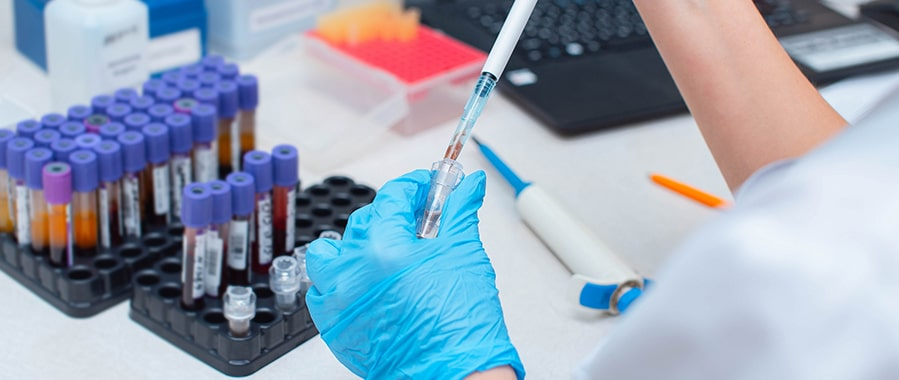
A strict 12-hour fast was the standard. No exceptions. That said, modern data and updated ACC/AHA guidelines have largely overturned that rule. We are breaking down exactly when fasting is scientifically necessary (and when it isn’t) while analyzing the true magnitude of difference food makes on your metrics. We want to ensure your lipid profile accurately reflects your cardiovascular risk.
For decades, the mandate was rigid.
Nothing by mouth for eight to twelve hours before a blood draw. It was considered the gold standard for accuracy. But at Vanguard Performance Labs, we rely on data rather than tradition. And the current metrics tell a different story.
The medical community is pivoting.
Evidence increasingly shows that non-fasting samples often provide a superior assessment of cardiovascular risk. This is because they reflect your biology in its natural, “fed” state – which is where you spend the vast majority of your life. We view this as a move toward practical accuracy over theoretical perfection. Measuring how your body processes lipids after a meal offers a more realistic snapshot of arterial stress than a controlled, starvation-state baseline.
That said, biology refuses to adhere to a single, universal standard.
While we see that most patients can safely skip the misery of an overnight fast, critical exceptions still exist (and they matter). Think of unique metabolic factors. Or perhaps a history of wild triglyceride swings. In those specific scenarios, the data requires a tighter leash. Distinguishing between a smart efficiency and a clinical necessity is vital, so ensure you understand your specific needs before booking that next blood draw.
The Guideline Shift: Why Fasting Is No Longer the Default
For decades, standard advice was to fast for 8 –12 hours before a cholesterol test.
That rigid requirement created a massive operational bottleneck. We prioritize metrics that reflect reality rather than idealized laboratory conditions.
Consider how your body actually functions day-to-day. Humans spend the vast majority of their lives in a “post-prandial” (fed) state, constantly processing nutrients. We are rarely empty. Consequently, measuring lipids while your system occupies this active state often serves as a stronger predictor of actual arterial risk. It captures exactly how your internal ecosystem handles fats under the pressure of real-world conditions.
We want to see how the engine runs on the highway. Not just while it sits idling in the garage.
Another major driver for this update is pure logistics. Fasting creates friction. When patients are forced to fight for early morning appointments or endure hunger, cancellation rates naturally spike.
People delay critical screenings simply because they absentmindedly drank coffee with cream.
By removing this barrier to entry, compliance improves significantly. So, if you are wondering if fasting is required for a lipid panel today, the answer for a standard risk assessment is generally no.
That said, eating beforehand does shift specific metrics within the panel. The critical question isn’t whether you can eat, but exactly how much that meal skews the results compared to a completed fasted baseline.
Fasting vs. Non-Fasting: Analyzing the Data Variance
There is a rigid assumption that eating before a blood draw effectively ruins the data. We often see patients panic, assuming a single piece of toast renders their entire lipid panel useless. But the numbers paint a different picture. When we analyze the difference between fasted and non-fasted states, the variance for most key metrics is negligible. Total cholesterol and HDL (high-density lipoprotein) remain consistent regardless of your last meal. These markers are resilient. They don’t fluctuate just because you ate breakfast.
The numbers actually tell a different story.
The primary concern has always centered on LDL (low-density lipoprotein).
Historically, the requirement for 12 hours of fasting existed specifically to stabilize the LDL calculation. The Friedewald equation, which is used to estimate LDL, relies on triglyceride levels (which are sensitive to food). The logic held that if triglycerides spike, the LDL count becomes unreliable.
Modern data challenges this necessity.
According to Harvard Health Publishing, an analysis utilizing data from a clinical trial of 4,100 people compared results from lipid tests done with and without fasting. The findings were simple. LDL (bad) cholesterol values were only about 4 milligrams per deciliter (mg/dL) higher when people weren’t fasting compared to fasting results.
From a clinical perspective, a 4 mg/dL shift is minor. It rarely alters a diagnosis or changes a treatment plan.
The Triglyceride Factor
Triglycerides are the one metric that exhibits genuine sensitivity to food intake. Levels rise as your body processes dietary fats.
That said, we argue that this variance is a feature. Not a bug.
A non-fasting triglyceride level offers a real-world snapshot of how your metabolic system functions under load. It reveals exactly how efficiently your body clears fat from the bloodstream after a meal. This “stress test” perspective can sometimes offer more actionable data than a controlled, fasted baseline.
For the vast majority of the population, the convenience of a non-fasting test outweighs the negligible precision gained by starving for half a day. The data supports a shift toward patient-friendly protocols.
While the averages suggest non-fasting is safe for the general population, specific clinical scenarios still demand the precision of a fasted state.
Critical Exceptions: When You Must Still Fast
For the majority of the population, skipping the fast is acceptable. It works.
But at Vanguard Performance Labs, we operate on the principle that data integrity is paramount. There are specific biological contexts that render non-fasting results functionally useless, and ignoring them compromises the entire dataset.
Here is where we draw the line.
If your triglyceride levels are known to exceed 400 mg/dL (hypertriglyceridemia), food intake creates far too much noise in the sample. It compromises the data. Since the fat content in a recent meal can artificially spike these numbers, we are left without a way to determine your true baseline. Or to accurately gauge the effectiveness of a treatment plan.
We also see mandatory fasting protocols for patients managing genetic lipid disorders. Familial hypercholesterolemia, for instance.
Precision matters here.
The same rigor applies if you are recovering from pancreatitis; the metabolic volatility requires a clear, fasted snapshot to ensure safety.
You might encounter confusion regarding which blood tests require 12 hour fasting. While glucose tests almost always do, the lipid panel joins that strict category specifically when these pre-existing conditions exist. Even if you don’t fall into these high-risk groups, a non-fasting test that returns abnormal results triggers an automatic protocol.
You need a follow-up confirmation test. Performed in a fasted state.
This confirmation is critical.
Once you determine that a fasted test is necessary, the focus shifts to execution.
Practical Preparation Rules: Optimizing Test Accuracy
Execution dictates data quality.
At Vanguard Performance Labs, we operate on a straightforward principle: bad input leads to bad output. If you compromise the testing conditions, those lipid panel results become worse than useless – they become misleading tools for making strategic health decisions.
Our objective is getting a clean baseline.
Hydration is your first priority. Non-negotiable. There is a persistent misconception that “fasting” implies “nothing by mouth,” but that is incorrect. Strict dehydration is actually the one thing you must avoid before a lipid panel.
When you are dehydrated, blood volume decreases.
This leads to a common question: does drinking water actively lower cholesterol? Technically, the answer is no. It will not strip lipids from your arteries. But there is a nuance here. Adequate hydration prevents the false elevation caused by hemoconcentration, ensuring your numbers reflect metabolic reality rather than just a lack of fluid. We want the data to be accurate. For that reason, we advise that you drink plain water freely right up until the draw.
Then there is the coffee debate.
If you keep the cup black – meaning no sugar, heavy cream, collagen, or MCT oil – it generally won’t skew your lipid markers.
That said, we still recommend caution.
Since caffeine is a diuretic (looping back to the hydration issue) and can temporarily impact blood pressure, it introduces unnecessary variables into your data. If you want absolute precision, plain water is the superior choice.
Two subtle variables often ruin otherwise perfect fasts:
Start with medications. Unless your physician explicitly instructs you to stop, continue your daily regimen. Stopping abruptly introduces instability. That makes long-term tracking difficult for us. As for gum and mints, avoid them completely. Even “sugar-free” options – which often seem harmless – can trigger digestive enzymes or contain trace starches that spike triglycerides just enough to muddy the data.
You want the results to reflect your physiology. Not your morning breath mint.
Getting the physical intake right is only half the battle. Your body responds to more than just calories. External pressures play a massive role in what ends up in your bloodstream.
Beyond Food: Impact of Stress, Alcohol, and Exercise
Everyone fixates on the fasting window. You watch the clock, skip your morning coffee, and assume the results will be pristine.
But that assumption is often wrong.
Sticking strictly to dietary rules while ignoring other physiological inputs compromises the integrity of the test. When we assess what actually throws off a cholesterol panel, we have to look at the complete 48-hour window leading up to the appointment.
Alcohol acts as a substantial disruptor.
Even moderate consumption 24 to 48 hours before a draw interferes with liver function more than most people realize. Because the liver prioritizes metabolizing ethanol above all else, this process leaves excess lipids circulating in the bloodstream right when you need them cleared out. This causes a temporary but sharp spike in triglycerides.
The consequence is a skewed dataset that essentially mandates a re-test.
Then you have physical exertion.
Consistent movement is obviously vital for long-term optimization. No argument there. But hitting a heavy training session right before a test creates unnecessary noise in the signal. When you engage in vigorous exercise, your body mobilizes fatty acids for fuel and shifts plasma volume, effectively skewing the immediate metrics (and confusing the results). It muddies the water. To keep the data clean, we recommend avoiding high-intensity training for at least 12 hours before the needle hits the vein.
This ensures the sample represents your actual baseline. Not just your workout intensity.
One last factor worth considering: the biological impact of pressure.
Short-term anxiety does more than just race your pulse. It fundamentally alters blood chemistry. When acute stress hits, the body releases cortisol to mobilize energy reserves – specifically glucose and lipids – intended for a “fight or flight” response. While this biological reaction serves a purpose in nature, it creates noise in the data. If you rush to the lab in a panic, those mobilized fats are circulating right when we draw the sample. We end up with numbers that are artificially inflated.
Controlling these inputs gives us a clean, actionable dataset. But clean data is useless if you don’t know where the goalposts are.
Pediatric vs. Adult Screening Protocols
Children are not simply miniature adults. Their metabolic rates fluctuate constantly. Hormones surge. Growth spurts alter almost every biometric marker we track. If you apply adult lipid standards to a pediatric patient, you ignore this biological reality.
You need specific timing.
We do not screen randomly. Instead, we look for distinct windows where the data is most reliable. It is recommended that children get checked for high cholesterol once between the ages of 9 and 11.
Consider this your first critical baseline.
Then we hit pause. Puberty naturally suppresses cholesterol levels, creating a misleading data trough that can easily hide underlying issues. We usually resume screening only after that hormonal volatility settles down.
The Fasting Question for Minors
Adult protocols are shifting toward non-fasting panels (it’s more convenient, certainly). Pediatric guidelines, however, remain conservative. We often prefer fasting for that initial 9-11 window.
It strips away variables.
Establishing a clean baseline is vital because at this age, we aren’t just looking for evidence of poor dietary choices. We are screening for familial hypercholesterolemia.
Genetic lipid disorders do not wait for adulthood. Catching them early allows us to implement interventions that prevent decades of silent arterial damage. Getting these protocols right sets the stage for accuracy that lasts a lifetime.
Moving Forward: Ensuring Accurate Lipid Management
Deciding whether or not to fast ultimately relies on your specific context. For the vast majority of people undergoing a routine screening, skipping breakfast is often just an unnecessary hurdle.
But precision changes the math.
If you are currently tracking high triglycerides or have a history of metabolic issues, the traditional fast provides the clarity needed for accurate clinical decisions. We, at Vanguard Performance Labs, look at data consistency. If your baseline was established while fasting, sticking to that protocol is the only way to ensure you are tracking real physiological changes (rather than just picking up variable noise from your diet).
Coordinate with your provider. They can help tailor a risk assessment that fits your specific profile. The goal isn’t just getting a number on a page. It is about building a reliable strategy for your long-term health.
Leave a Reply