The Full Thyroid Panel: Why Standard Testing Fails You
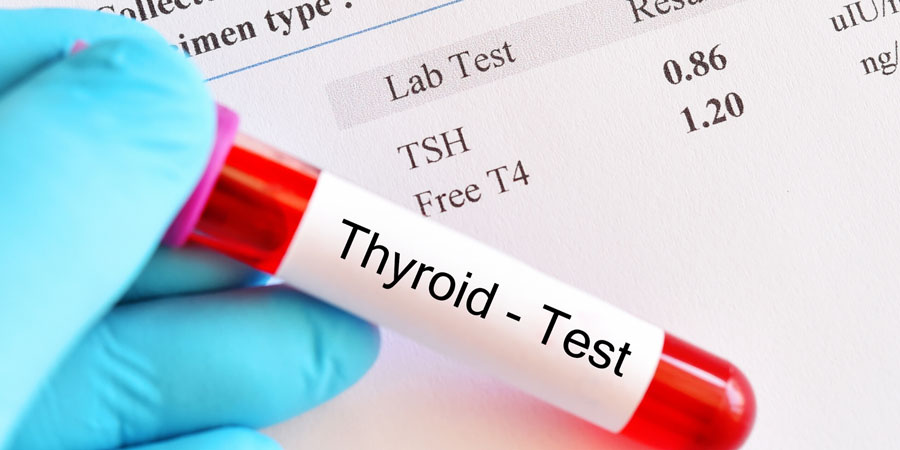
Standard medical protocols often rely on a single biomarker to dictate thyroid health, leaving millions with unresolved symptoms despite ‘normal’ results. This guide dismantles the basic screening approach and defines the comprehensive metrics required to truly assess metabolic physiology.
There is a specific, maddening frustration reserved for the high-performer who is told their bloodwork is “perfect” while their physiology feels like it is failing. You likely know the scenario well. You experience unshakeable fatigue, slow recovery times, or cold intolerance, yet your physician points to a lab report and sends you home without answers.
The issue isn’t your perception of your own body. It is the data being used to judge it.
Standard medical practice often relies exclusively on TSH (Thyroid Stimulating Hormone) as a singular tripwire. If that one number lands anywhere within a massive, generalized reference range, the investigation stops. At Vanguard Performance Labs, we consider this superficial screening unacceptable for anyone serious about optimization. Relying on a pituitary signal to judge the actual function of your metabolic engine preserves a massive blind spot in your health profile.
We don’t deal in approximations. To understand why your engine is misfiring, we have to look past the warning light and inspect the machinery itself.
Beyond TSH: What Is Included in a Full Thyroid Panel?
True physiological optimization demands granular data. General approximations simply do not cut it.
When we audit your internal biology, we aren’t interested in a quick glance at the dashboard warning lights; we need to see the complete metabolic cascade in motion. A comprehensive assessment – must evaluate six specific biomarkers:
- TSH
- Free T4
- Free T3
- Reverse T3
- Thyroid Peroxidase Antibodies (TPOAb)
- Thyroglobulin Antibodies (TgAb)
Anything less leaves you flying blind.
The problem is that medical nomenclature often obscures the truth. A common scenario involves walking into a clinic and asking for a “total thyroid panel test” with the assumption that you are getting the full picture. Unfortunately, you may receive data that is functionally irrelevant.
You might notice what is missing: the active hormone.
To be blunt, we do not care about “Total” T4.
These levels include hormones bound to proteins, rendering them biologically inactive. Your cells cannot use them. We focus exclusively on “Free” levels because these are the hormones actually available to your tissues.
The Physiology of the Markers
You cannot optimize a system you do not understand. Here is the specific role each biomarker plays in your metabolic engine:
- TSH (The Signal): This acts as the pituitary gland shouting at the thyroid to produce hormones. It is a request. Not a result.
- Free T4 (The Storage): Produced by the thyroid, this prohormone circulates in the blood waiting to be converted. It represents potential energy.
- Free T3 (The Active): The result of conversion. This is the gas. It enters the cell nucleus and dictates metabolic rate, cognitive speed, and muscle recovery.
- Reverse T3 (The Brake): Under stress, the body converts T4 into Reverse T3 instead of Free T3. It blocks the receptors. Metabolic hibernation follows.
- Antibodies (The Attack): TPOAb and TgAb indicate if your immune system is actively destroying your thyroid tissue (Hashimoto’s).
If you aren’t measuring Free T3 and Reverse T3 simultaneously, your metabolic status remains a mystery.
It is entirely possible to have perfect TSH and optimal T4 levels on paper. But if your T3 is low or your Reverse T3 is high, you are functionally hypothyroid. You will feel exhausted regardless of your “normal” labs.
That distinction is critical.
However, if you ask a general practitioner for this specific array, you will likely encounter resistance. This brings us to a frustrating reality in modern medicine.
The Standard of Care vs. Optimal Health: Why Doctors Don’t Run Full Panels
Most general practitioners follow a rigid laboratory algorithm known as the “TSH reflex.”
It works like a flowchart. If your Thyroid Stimulating Hormone (TSH) levels fall anywhere within the broad standard reference range, the testing stops immediately. The lab equipment literally halts the process.
No Free T3. No Reverse T3. No antibodies.
This approach isn’t designed to sabotage you; it is designed to save money. The conventional medical model operates on triage and disease screening. Doctors are trained to look for pathology – frank illness severe enough to require immediate pharmaceutical intervention or surgery – rather than subtle physiological imbalances that degrade performance.
At Vanguard Performance Labs, we differentiate between being “clinically normal” and “physiologically optimal.”
A standard insurance-based clinic considers you healthy as long as you aren’t dying. We consider that a low bar. The gap between a reference range designed for the average sick population and the tight metrics required for elite cognitive and physical output is massive.
Insurance billing codes often dictate that full panels are “medically unnecessary” without a pre-existing diagnosis. Consequently, you cannot rely on a system built for sickness to help you thrive. Obtaining a complete picture of your internal biology requires stepping outside these bureaucratic constraints and utilizing private testing to secure the data others ignore.
Once you have the raw numbers in hand, the next challenge is understanding them. You need to know which specific markers correlate to the drag you feel during a workout or the brain fog hitting you at 2 PM.
Decoding the Signals: Correlating Symptoms to Specific Biomarkers
Symptoms are not random annoyances. They are data.
At Vanguard Performance Labs, we view every physical sensation as a downstream effect of an upstream biochemical failure. When you feel “off,” your internal biology is signaling a specific breakdown in the optimization protocol. While standard medicine frequently dismisses these signals – provided the TSH falls within a broad reference range – we take a different approach.
We map the subjective experience directly to the objective data.
Consider the “tired but wired” phenomenon.
You are exhausted to the bone, yet sleep remains elusive. Your stress tolerance is nonexistent. In our analysis, this specific profile rarely correlates with TSH. Instead, the data tracks closely with High Reverse T3. When this marker spikes, your body has effectively pulled the emergency brake to conserve energy. It is a biological reflex. Usually, this occurs as a direct response to chronic stress or aggressive caloric restriction.
It isn’t laziness. You are biologically sequestered in starvation mode.
Now consider a different scenario often missed by standard diagnostics. We see clients whose labs appear “normal” on paper, yet they are still battling cold hands, thinning hair, and persistent brain fog. At Vanguard, we recognize this distinct pattern as the classic signature of Low Free T3. While your thyroid is doing its job by producing the precursor hormone (T4), your metabolic machinery fails to convert it into the active T3 form that actually drives cellular performance. The fuel is sitting in the tank. The engine just isn’t getting any of it.
Then consider the inflammatory profile.
Joint pain. Systemic swelling. Deep fatigue that no amount of caffeine can touch. When we see these symptoms, they often point directly to High Antibodies (TPO or TgAb). What this means in practice is that even if your hormonal output looks technically “perfect” on paper, the presence of these antibodies confirms your immune system is actively attacking the tissue.
To eliminate guesswork, cross-reference your current state against the 20 common signs of thyroid dysfunction:
- Unexplained fatigue
- Weight gain or inability to lose weight
- Cold intolerance (hands/feet especially)
- Hair loss or thinning
- Loss of outer eyebrow third
- Brain fog and poor memory
- Depression
- Anxiety or panic attacks
- Chronic constipation
- Dry, cracking skin
- Muscle weakness
- Joint pain and stiffness
- Puffiness in the face
- Irregular menstrual cycles
- Low libido
- Elevated cholesterol
- Slow or irregular heart rate
- Insomnia specifically involving early waking
- Brittle nails
- Hoarseness or neck swelling
If you found yourself identifying with more than three of these items, the standard blood panel usually covers up the truth instead of revealing it. The data gets buried. That said, listing out symptoms is only the first stage of triage. When antibodies are the specific drivers behind these signals, we are no longer dealing with simple hormonal management.
We are dealing with a confused immune system.
Autoimmunity: Distinguishing Hashimoto’s from Graves’ Disease
Most people operate under the assumption that they have a broken gland.
They don’t.
In many cases, the thyroid is actually functioning perfectly fine given the circumstances; it is simply an innocent bystander taking heavy fire from your own biology.
Our first step is to screen for Hashimoto’s Thyroiditis. This condition manifests when the immune system decides to systematically dismantle thyroid tissue. To catch it, we look for two distinct biomarkers: Thyroid Peroxidase Antibodies (TPOAb) and Thyroglobulin Antibodies (TgAb). When these markers flag on your blood panel, it changes the diagnosis entirely. It indicates your body is treating its own metabolic engine as a foreign invader.
Graves’ Disease presents a completely different biological reality.
The markers change. We test for Thyroid Stimulating Immunoglobulin (TSI) and TSH Receptor Antibodies (TRAb). Unlike the destructive mechanisms of Hashimoto’s, these antibodies do not tear down tissue; they hijack the control center. The result is a gland forced to overproduce hormones until the engine inevitably burns out.
Distinguishing between these states is non-negotiable.
A protocol designed to suppress an overactive system will fail if the underlying mechanism is actually destructive autoimmunity requiring immune modulation (a nuance often missed in standard care). You cannot optimize physiology by guessing which side of the immune spectrum is firing.
At Vanguard, we view this specificity as a baseline requirement.
But identifying the correct antibodies is only the first step. Accurate diagnosis is frequently blocked by a pervasive issue in standard medicine: how the establishment chooses to define “healthy.”
The Data Gap: Standard Lab Ranges vs. Optimal Performance
You cannot optimize what you measure against a broken ruler.
Most clients assume the “reference range” on a lab report represents ideal health. It doesn’t. These numbers are usually calculated based on a bell curve of that specific lab’s total population.
Think about who typically goes to a hospital for blood work.
Since healthy, high-performing individuals rarely seek out diagnostic testing, the reference group ends up heavily skewed toward pathology. Being “in range” simply means you are statistically indistinguishable from the average unwell person.
That is not the standard we set at Vanguard Performance Labs.
We focus on functional ranges (specific biological windows where physiology thrives rather than barely survives). We don’t want to know if you are dying. We want to know if you are firing on all cylinders.
Defining these targets allows us to bridge the gap between the clinical absence of illness and elite physical output. But applying these tighter standards requires absolute data integrity. Even the most sophisticated analysis fails if the blood sample itself is compromised by external factors you didn’t account for.
Protocol: Test Preparation, Biotin Interference, and Logistics
The most significant threat to the accuracy of your thyroid data is likely sitting in your supplement cabinet right now. Biotin. High doses of Vitamin B7 create a chemical disruption in the standard immunoassays used by most major laboratories. While essential for metabolic function, excess biotin competes with assay reagents in the test tube (a blind spot in many diagnostic protocols). This technical glitch produces a specific, misleading pattern: falsely suppressed TSH and falsely elevated Free T4.
The lab report suggests you are hyperthyroid. Your internal biology says otherwise.
This generates a “ghost” diagnosis.
It leads to incorrect dosing strategies and wasted months trying to fix a problem that does not exist. To ensure data integrity, we enforce a strict washout period. You must discontinue any biotin-containing supplements – this includes B-complexes and standard multivitamins – at least 72 hours prior to your blood draw.
If you are on a high-dose protocol for hair and skin health, a full week off is safer.
Timing and Logistics
Circadian biology dictates the rules here.
TSH levels are not static; they fluctuate significantly throughout the day based on your internal clock. A blood draw at 3:00 PM renders the data useless for our benchmarking purposes because the levels will have naturally dropped.
Testing must happen in the morning. Ideally between 7:00 AM and 9:00 AM. Fasted.
This specific window captures TSH at its most clinically relevant baseline.
We often recommend Direct-to-Consumer (DTC) channels over traditional doctor-ordered labs for this specific battery. The reality is that insurance models are designed to treat disease, not optimize performance; they typically reject comprehensive panels without a pre-existing diagnosis, forcing physicians to order incomplete tests. DTC grants you autonomy. It offers speed.
Strategic Monitoring: Testing Frequency and Stages
Optimization is not a one-time event. It is a process of calibration.
Your initial diagnosis must always utilize the full panel to establish a concrete baseline. Without this complete data set, we are flying blind. If markers are off and we initiate a protocol involving medication or specific supplementation, we enter the titration phase. This is the most critical window for data collection.
Biology moves at its own speed.
Thyroid hormones generally require six to eight weeks to stabilize in the blood. Testing sooner yields noise; testing later risks wasted time on an ineffective dose. Consequently, we re-test the full thyroid panel within that six-to-eight-week window to verify how your internal biology responds to the inputs.
Do not make the mistake of reverting to TSH-only monitoring during this stage.
A normalized TSH often masks poor peripheral conversion. You might have sufficient T4, but if your body fails to convert it to active Free T3, performance suffers regardless of what the standard chart says. We monitor the entire pathway to ensure the protocol delivers results where they count. Once stability is confirmed, frequency drops to a bi-annual audit to ensure you maintain that elite edge.
Final Analysis: Take Control of Your Physiology
Once we eliminate the guesswork, the path to optimization becomes clear. Operating without a complete picture of your internal biology is a strategic error. You simply cannot manage what you refuse to measure.
So stop accepting “normal” as a diagnosis when you feel suboptimal. Check us out online today.
Demand the full panel. If standard avenues won’t provide the depth you require to assess your metabolic health, order the diagnostics independently. True performance relies on precision. Not hope. Take control of your physiology with objective data, because your potential is too valuable to leave hiding in a blind spot.
Leave a Reply