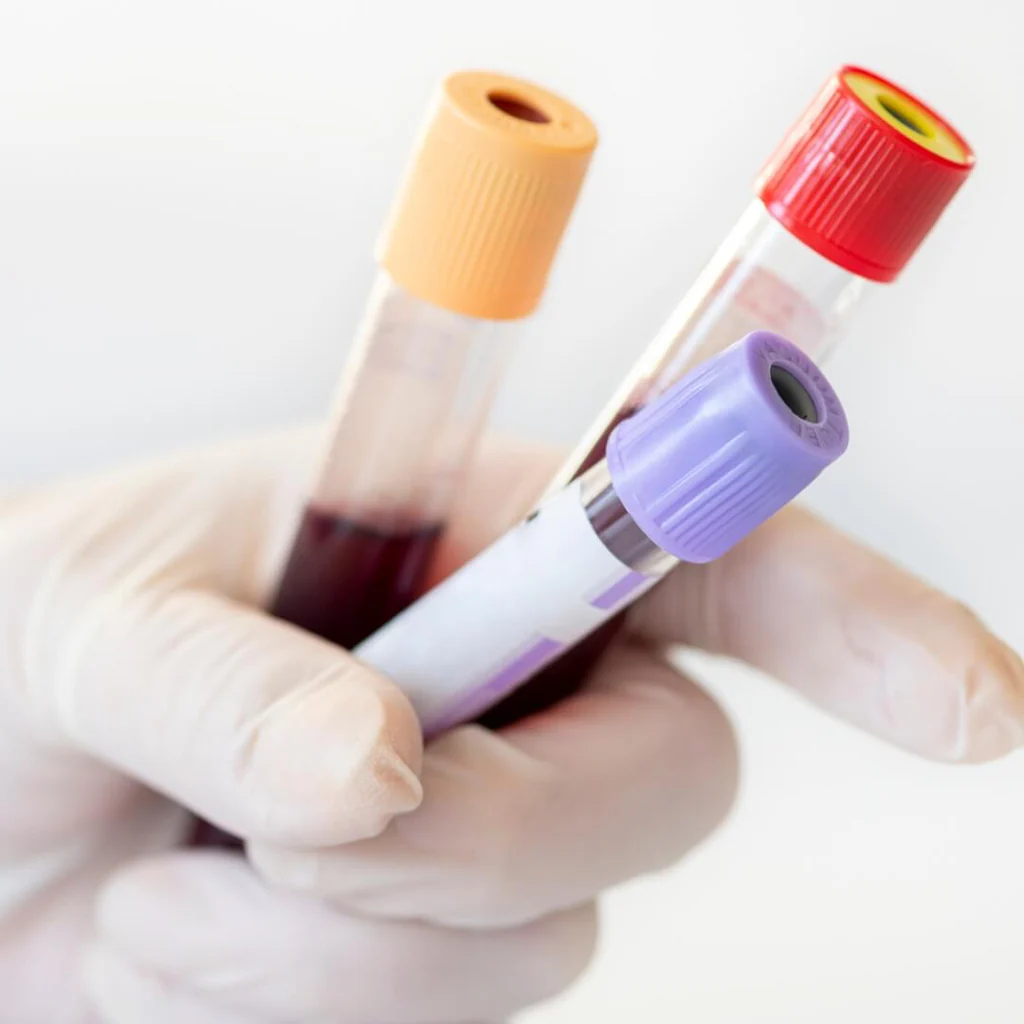
Most people search for a lab when they feel sick, but high performers look for data when they want to optimize. We help you navigate the confusing world of local testing centers to ensure you get accurate, actionable insights rather than just a pass/fail grade on your health.
You pull up your phone. You type “blood work labs near me” into the search bar. Within milliseconds, a map populates with red pins scattered across your city.
There are multiple locations to choose from: a hospital downtown, an urgent care clinic in the strip mall, even a dedicated phlebotomy center a few blocks away. Finding a place is easy, but finding a partner who understands what to do with that sample is a different matter. This is where we at Vanguard Performance Labs come in.
When you are looking for a lab, you shouldn’t just be looking for the closest location with an open appointment slot. You need to understand the logistics of sample collection, the critical difference between reference ranges and optimal ranges, and how to prepare your body to ensure those numbers actually reflect your true baseline.
Beyond the Map Pin: Why Proximity Isn’t Enough
The convenience factor is seductive. We all have busy schedules. Driving twenty minutes out of your way for a blood draw feels like a hassle when there is a clinic right around the corner.
But not all labs operate with the same protocols. Commercial laboratories process millions of samples a day. It is a volume game. Speed is often prioritized over precision. While this model works fine for checking if you have strep throat or a raging infection, it lacks the nuance required for performance optimization.
We have found that the environment where you get your blood drawn matters too. Think about the waiting room of a typical urgent care. It is stressful. People are coughing. A child is crying in the corner. You are worried about getting to work on time.
Stress spikes cortisol. If you are there to test your adrenal function or hormone balance, that acute stress response can skew your results before the needle even touches your skin. You might get a result that says your cortisol is high, leading to a misdiagnosis or a misguided supplement protocol, when in reality, you were just annoyed by the waiting room environment.
We advise our clients to look for appointment-based private centers or mobile phlebotomy services. These options allow you to control the variables. You walk in, you sit down, and you get the draw done in a calm state.
The Problem with ‘Normal’
Reference ranges are calculated based on the population average. They take a bell curve of the people who visit that lab – many of whom are sick, sedentary, or metabolically unhealthy – and establish a mean. If you fall within two standard deviations of that sick average, you are considered ‘normal.’
At Vanguard Performance Labs, we don’t compare you to the average sedentary person. We compare you to where a high-functioning human should be.
A testosterone level that is ‘normal’ for an 80-year-old man is catastrophic for a 35-year-old athlete. A ferritin level that is ‘acceptable’ for survival will destroy your ability to run a marathon or recover from heavy lifting.
When you search for “blood work labs near me,” you are usually finding the facility that draws the blood. But the interpretation of that blood? That needs to come from experts who understand performance physiology.
Navigating the Logistics of Local Testing
Once you have identified a facility – often a partner lab that we work with – you need to manage the variables of the test itself. Data is only as good as the input. If you treat your blood draw casually, you will get casual data.
The Fasting Variable
Most comprehensive panels require fasting. This usually means 8 to 12 hours without food.
Drinking water is fine. In fact, water is necessary.
Dehydration is the enemy of a good blood draw. When you are dehydrated, your veins constrict. The phlebotomist has a harder time finding a vein, which can lead to digging, bruising, and hemolysis (the rupturing of red blood cells). Hemolyzed samples are often rejected by the lab, meaning you have to go back and do it all over again.
Drink plenty of water the morning of your test. Black coffee is a gray area. Some markers are unaffected, but caffeine can transiently affect blood pressure and potentially cortisol. If you want the cleanest data possible, stick to water.
Timing Your Visit
Circadian rhythms regulate your biology. Your hormones do not stay static throughout the day. They pulse. Testosterone and cortisol, for example, peak in the early morning and decline throughout the day.
If you get your blood drawn at 8:00 AM one year, and then at 3:00 PM the next year, you cannot compare those results. The 3:00 PM result will likely show lower testosterone, leading you to think your levels are crashing when they are simply following a natural daily rhythm.
We recommend scheduling your draw for the same time window every single time. Ideally, this is between 7:00 AM and 9:00 AM. Consistency creates a reliable baseline.
The Workout Factor
This is where athletes often get tripped up. Intense exercise causes acute inflammation. It damages muscle tissue. That is how we grow – stress and recover. But if you crush a heavy leg day or run ten miles the afternoon before your blood test, your markers will reflect that acute trauma.
You might see elevated liver enzymes (AST and ALT). These are released when muscle tissue breaks down. A general practitioner might see high AST and assume you have a drinking problem or liver disease. We see high AST and ask, “Did you squat heavy yesterday?”
Similarly, creatine kinase (CK) will be sky-high. C-reactive protein (CRP) might be elevated.
For the most accurate baseline of your systemic health, we suggest a deload period of 24 to 48 hours before your draw. Keep movement light. Let the acute inflammation subside so we can see what is happening chronically.
Key Biomarkers Most Labs Miss
If you walk into a standard clinic and ask for a check-up, you will likely get a CBC (Complete Blood Count) and a CMP (Comprehensive Metabolic Panel). These are foundational. They tell us if you are anemic, if your kidneys are working, and if your electrolytes are balanced. But they leave a massive amount of information on the table.
Insulin Sensitivity
Most doctors check fasting glucose. This is a snapshot of your blood sugar at that exact moment. It is useful, but it is a lagging indicator. Your blood sugar might be normal because your pancreas is working overtime to pump out massive amounts of insulin to keep it there. You could be insulin resistant for years before your fasting glucose finally creeps up.
We look at Fasting Insulin and HbA1c. These give us a view of your metabolic machinery over the last three months.
Thyroid Health
The standard of care is to check TSH (Thyroid Stimulating Hormone). If TSH is normal, the investigation stops. This is inadequate. TSH is the signal from the brain to the thyroid. It doesn’t tell us how much hormone the thyroid is actually producing (T4), or more importantly, how much of that is being converted into the active form (T3) that your cells can actually use.
Stress and inflammation can block that conversion. You can have normal TSH and normal T4, but low T3. You will feel tired, cold, and sluggish, and your doctor will tell you nothing is wrong. We demand a full panel: TSH, Free T4, Free T3, and Reverse T3.
Cardiovascular Risk
We look at ApoB (Apolipoprotein B). This measures the number of atherogenic particles in your blood. It is a far more accurate predictor of cardiovascular risk than LDL cholesterol alone.
We also look at hs-CRP (High-Sensitivity C-Reactive Protein). This measures systemic inflammation. Heart disease is largely an inflammatory process. If your lipids are perfect but your inflammation is high, you are still at risk.
The Vanguard Approach: How We Handle “Near Me”
We do not believe you should be limited by the expertise of the clinic down the street.
We operate on a model that separates the collection from the analysis. You search for “blood work labs near me” to find a draw site. You go there for the physical act of the blood draw. They are the logistics partner. They handle the needles and the tubes.
But the order comes from us. And the results come back to us. This allows us to construct custom panels that a standard primary care physician might not sign off on because they aren’t deemed “medically necessary” by insurance standards. It allows us to apply our performance-based interpretation to the data. You get the convenience of a local location with the expertise of a specialized performance lab.
Insurance vs. Cash Pay
This is a friction point for many. Everyone wants their insurance to cover everything. But insurance companies are in the business of risk management, not health optimization.
They have strict criteria for what they will pay for. If you do not have a diagnosed disease, they often will not cover advanced lipid markers, full hormone panels, or detailed nutrient testing. They consider these “investigational” or “unnecessary.”
If you rely solely on insurance, you are letting an actuary decide what data you are allowed to see about your own body. We often operate on a cash-pay basis for specific panels. This gives us freedom. We don’t have to justify to an insurance adjuster why a 30-year-old male needs to know his Free T3 levels. If it matters for your performance, we test it.
The cost of these tests has dropped in recent years. What used to cost thousands of dollars is now accessible for a few hundred. We view it as an investment. You spend money on gym memberships, supplements, and high-quality food. Verifying that those investments are working is the logical next step.
What To Do With Your Data
Getting the results is not the finish line. It is the starting point. A PDF full of numbers is useless without a plan. If your Vitamin D is low, “take a supplement” is vague advice. We construct protocols that specify dosage, duration, and co-factors like K2.
If your testosterone is suboptimal, is it because of testicular failure (primary hypogonadism) or is your brain not sending the signal (secondary hypogonadism) due to stress or overtraining? The intervention for those two scenarios differs.
We look for patterns.
Perhaps your white blood cells are slightly elevated and your ferritin is high. This suggests inflammation. We then look at your cortisol, as high levels often indicate overtraining. The solution isn’t a pill; it’s a deload week and a focus on sleep hygiene.
Perhaps your MCV (Mean Corpuscular Volume) is high. This means your red blood cells are large. This can indicate a B12 or folate deficiency. We cross-reference that with your homocysteine levels to confirm methylation issues. This detective work is what separates a performance lab from a standard medical review.
Preparing for Your Draw: A Checklist
To ensure your search for “blood work labs near me” yields the best possible data, follow this protocol before your next visit:
- Hydrate: Drink 16-24oz of water upon waking.
- Fast: No calories for 12 hours prior. Black coffee is usually okay, but water is safer.
- Pause Supplements: Stop taking biotin (B7) 72 hours before the test. It can interfere with thyroid and troponin assays.
- Rest: No heavy lifting or HIIT sessions 24 hours prior.
- Time it Right: Schedule the appointment before 9:00 AM.
- Stay Calm: Arrive early. Don’t rush. Sit for 5 minutes before they call you back.
Moving Forward
Your health is an asset. Like any asset, it needs to be audited.
Relying on how you “feel” is subjective. You might feel fine today, but metabolic dysfunction can brew silently for years before symptoms manifest. Conversely, you might feel terrible, but without data, you are just guessing at the cause.
Don’t settle for the bare minimum. Don’t accept ‘normal’ as the goal.
When you look for a lab, look for a partner who understands where you are trying to go. The physical location is just a waypoint. The destination is peak performance.
At Vanguard Performance Labs, we are ready to help you decode your biology. Whether you are an elite athlete or a busy executive, the data you need is waiting in your veins. Let’s go get it.
Leave a Reply